Selasa, 10 Disember 2013

NST Online Top Stories - Google News

0 ulasan
Klik GAMBAR Dibawah Untuk Lebih Info
Sumber Asal Berita :-

NST Online Top Stories - Google News


Rescuers search for Nevada couple, 4 children missing in remote mountains - Detroit Free Press

Posted: 10 Dec 2013 09:18 AM PST

LATEST HEADLINES

General Motors CEO Dan Akerson plans to retire, and the automaker will appoint Mary Barra as his...- 12:23 pm

President Obama praised the U.S.- 6:28 am

The Detroit Medical Center says it has an exclusive partnership and ironclad contract with the...- 9:16 am

Some of tech's biggest names have banded together to form what is essentially an anti-NSA coalition.- 9:57 am

US attorney: 18 current, former Los Angeles County sheriff's deputies face array ... - Seattle Post Intelligencer

Posted: 09 Dec 2013 01:18 PM PST

LOS ANGELES (AP) — US attorney: 18 current, former Los Angeles County sheriff's deputies face array of charges.

Kredit: www.nst.com.my

Isnin, 9 Disember 2013

NST Online Top Stories - Google News

0 ulasan
Klik GAMBAR Dibawah Untuk Lebih Info
Sumber Asal Berita :-

NST Online Top Stories - Google News


Travel woes continue; stormy weather not done yet - USA TODAY

Posted: 09 Dec 2013 07:33 AM PST

Snow, ice and freezing rain will strike states from Texas to New England through Tuesday, promising icy roads, power outages and general unpleasantness for much of the country. VPC

John Bacon and Rick Jervis, USA TODAY 11:56 a.m. EST December 9, 2013

An unrelenting winter storm continued to spread its misery along much of the East Coast on Monday, providing a wake-up call of freezing rain, fog and mist to commuters and travelers.

The gloomy morning came hours after a swath of snow and ice plastered the landscape from Virginia to New England, causing highway pileups Sunday and disrupting commuters Monday morning. The latest snow and ice blast was in the East, but the storm's impact on anguished fliers was being felt across much of the nation.

The National Weather Service said the greatest area of concern was from central Virginia to southeast New York, where some areas were seeing another quarter inch of ice before before temperatures began rising Monday morning.

The respite could be brief: The weather service is forecasting another 3-5 inches of snow for the Washington-Baltimore area on Tuesday, where the weather service has issued a winter storm watch for the morning hours. New York City can expect 1-3 inches.

Federal offices in the Washington, D.C., area delayed opening by two hours Monday due to the weather, and schools across the region were opening late or closed for the day.

Flight delays may linger through much of Monday in the Northeast because of low clouds.The storm canceled more than 3,200 flights Sunday and delayed thousands more, according to estimates from the website Flightaware.com. More than 1,300 of Monday's flights were already canceled, the greatest share from Dallas/Fort Worth International Airport, which was still reeling from the effects of the ice storm that brought north Texas to a standstill.

Another 1,500 flights already had been delayed Monday. Tuesday's storm could bring new headaches.

Weather service meteorologist Bruce Sullivan said the new storm will sweep in from the southwest and bring rain to the South and snow from Virginia to southern New England before it fades. The Baltimore-Washington area will get the worst of it, he said.

"And it looks like it will role into the region at a terrible time, morning rush," Sullivan said.

The weekend snow came from an Arctic blast of frigid air that froze highways in the middle of the country over the weekend and knocked power out to thousands of homes. Frigid temperatures remained in place Monday for most of the north-central U.S., with many locations at or near 0 degrees.

Travel problems could linger into Monday afternoon, with freezing rain and icy conditions sticking around as wintry weather stretched from Missouri to Maine.

Forecasts had predicted 1 to 4 inches of snow across the Northeast, but the system dumped 6 to 12 inches in a swath that stretched from northern West Virginia to Philadelphia and east into New Jersey, said Brian Hurley, meteorologist with the weather service's Weather Prediction Center.

"We knew there was going to be some bands of precipitation," Hurley said. "We didn't quite expect it to have the intensity in snowfall that it did."

TWITTER: Follow USA TODAY Weather

The auction site eBay warned that severe weather across the country could delay shipments, especially in Arkansas, Mississippi, Tennessee, Ohio and Texas. The site urged customers to be patient with shippers. The lousy weather is something for which the major retailers and shippers do their best to accommodate, but they can only do so much.

Autoplay

Show Thumbnails

Show Captions

"Sure, it drives them crazy," said Dick Seesel, owner of Retailing in Focus, a retail consulting firm. "But you're talking about companies that today operate coast-to-coast." Macy's, for example, which is now a national instead of regional retailer, he said, is much less vulnerable to bad weather in one part of the country when it has operations nationwide.

Contributing: Bart Jansen and Doyle Rice, USA TODAY; Associated Press

“127 Hours” film subject arrested for domestic violence - CBS News

Posted: 09 Dec 2013 07:07 AM PST

DENVER, Colo. - Authorities say Aron Ralston, a hiker who gained widespread attention when he cut off his forearm to free himself after becoming trapped by a dislodged boulder in a Utah canyon, has been arrested in Denver over allegations of domestic violence.

Ralston, 38, was booked Sunday on charges of assault and wrongs to minors. Police spokeswoman Raquel Lopez tells The Associated Press she can't release any details until she speaks with a domestic violence detective.

Ralston was hiking in 2003 when he became trapped by a boulder and cut off his own arm to free himself. He went on to detail his struggles in a book, and his story was later adapted into the movie "127 Hours."

Booking documents don't indicate if Ralston has an attorney. He's scheduled to appear in court Monday.

Kredit: www.nst.com.my

Ahad, 8 Disember 2013

NST Online Top Stories - Google News

0 ulasan
Klik GAMBAR Dibawah Untuk Lebih Info
Sumber Asal Berita :-

NST Online Top Stories - Google News


South Africans Offer Prayers for Madiba - Voice of America

Posted: 08 Dec 2013 08:43 AM PST

— Mourners across South Africa heeded President Jacob Zuma's call to take time to worship and pray Sunday for the late president Nelson Mandela. At temples, mosques, synagogues and churches across the country, there were prayers for the man many South Africans refer to as Tata, or father.

At the Regina Mundi Roman Catholic Church in Soweto, early risers attended a 7 a.m. mass.

Parishioner Caroline Thakadu, a school administrator in Soweto, goes to the church each Sunday. She offered prayers for Mandela and South Africa.

"For our country I would ask God, to give us strength and unity and peace that Madiba, was, stood for. And people that are coming after him must behave the way he behaved. People mustn't look for what is for themselves. They must work for nation as he did. That is what we are asking for… May his soul rest in peace and there must be unity in South Africa," she said.

The church was a key meeting place for activists during the anti-apartheid struggle. Its sanctuary includes a stained glass window showing Mandela waving both hands in the air.

Thakadu said she was happy Mandela was no longer struggling in poor health.

"Tata Madiba, I feel relieved and I feel happy for his spirit, because now he's resting, everybody was suffering. So for that, that God has made this day, that he must rest, we are happy about that. But as Christians we know that after death there's life," she said.

x

Sunday morning worship service at the Melrose Temple, a Hindu temple in Johannesburg. The service is dedicated to the memory of former South African President Nelson Mandela. (Peter Cox/VOA)
Just north of Mandela's home in Houghton, the Melrose Hindu Temple held Sunday services, which temple trustee Gopal Thangavel Padayichie dedicated to Mandela's memory.

"We're hosting this particular prayer and service in the name of the great world icon and gracious man. The most noblest of all. We're holding this prayer in his memory, and we pray to Lord Muruga that he grants his soul peace forever," said Padayichie.

In the early 1990s, Nelson Mandela came to this Hindu place of worship in Johannesburg to offer a prayer on a day he was going in for a cataract operation.

He signed the temple's register book and told temple leaders to come visit his office for a donation. They obliged, and he stepped out of a meeting to speak with them.

"That was the greatest day of my life to meet a man of that caliber," he said.

Padayichie later learned that Mandela had twice used the temple as a hiding spot in Johannesburg during the 1960s before he was tried and incarcerated for trying to overthrow the apartheid government.

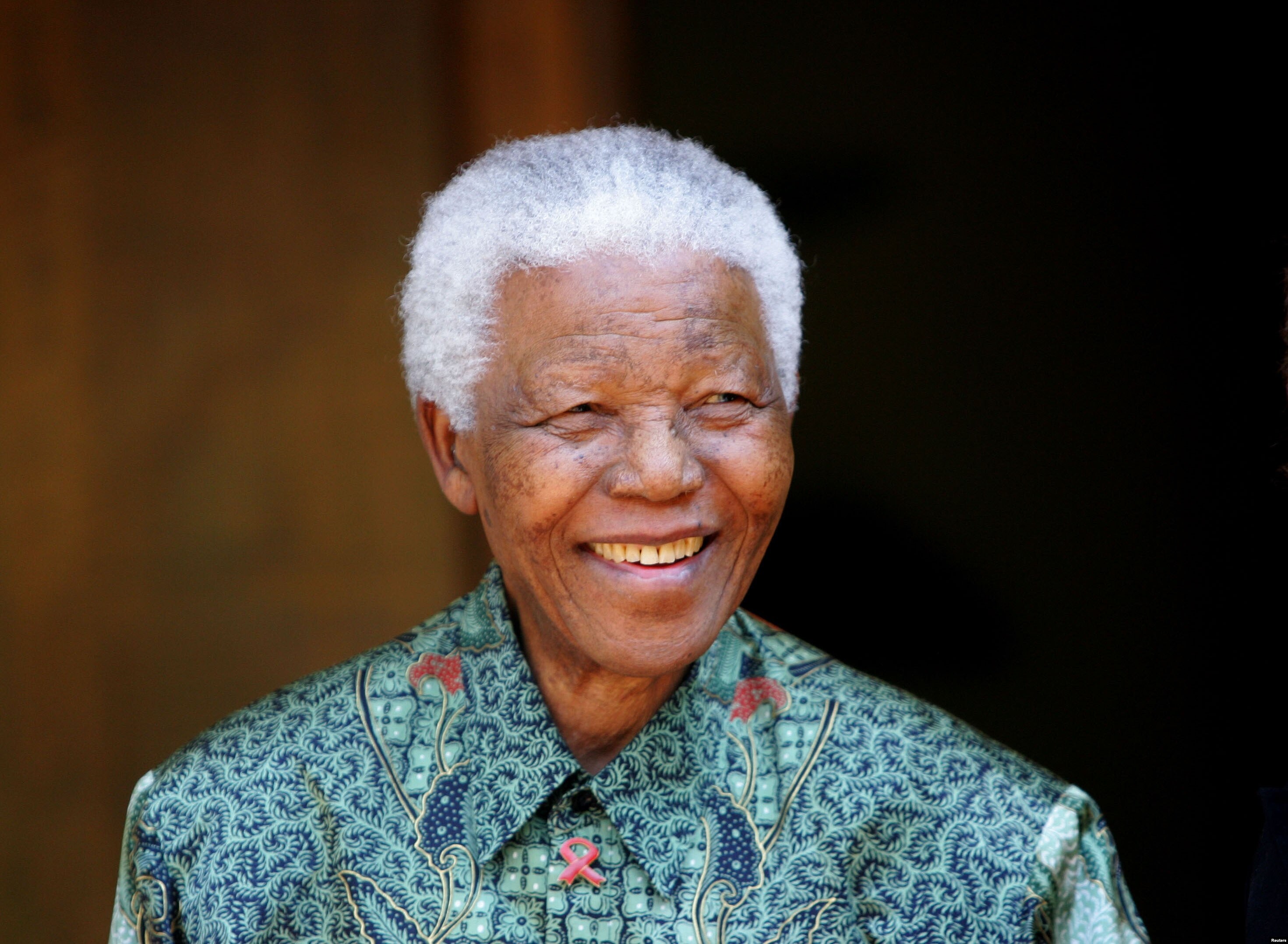
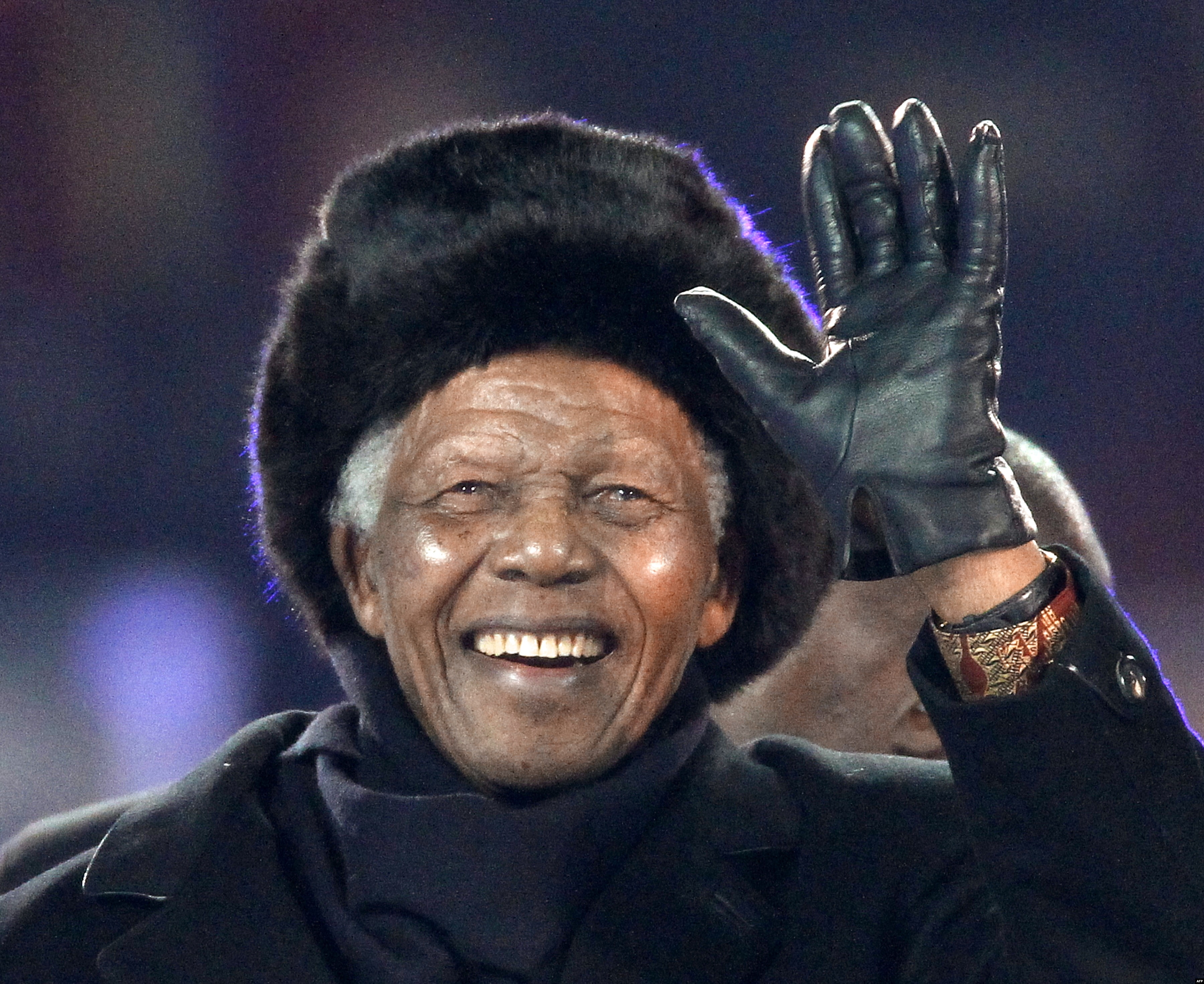
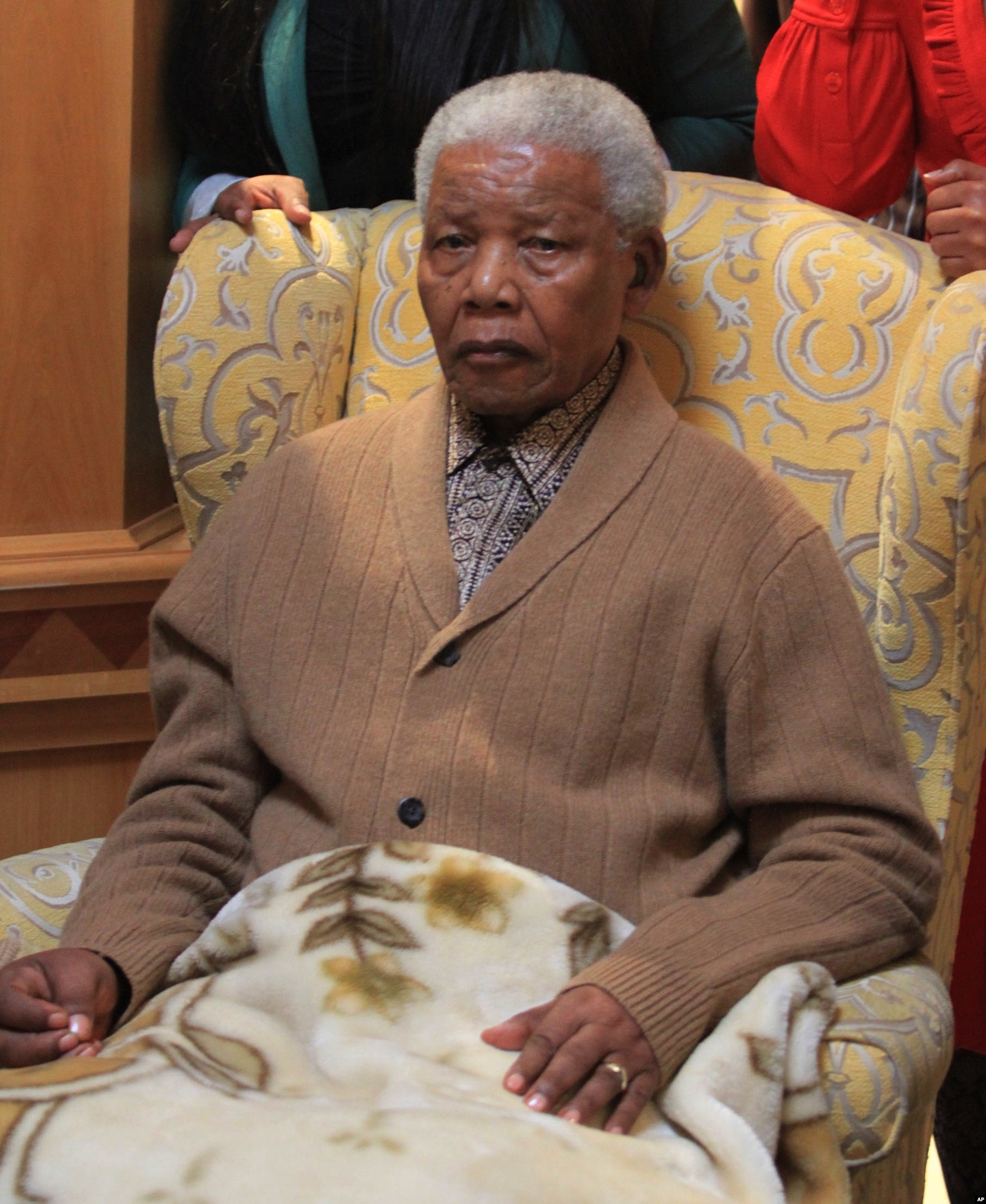
  • Nelson Mandela smiles for photographers at his home in Johannesburg September 22, 2005.

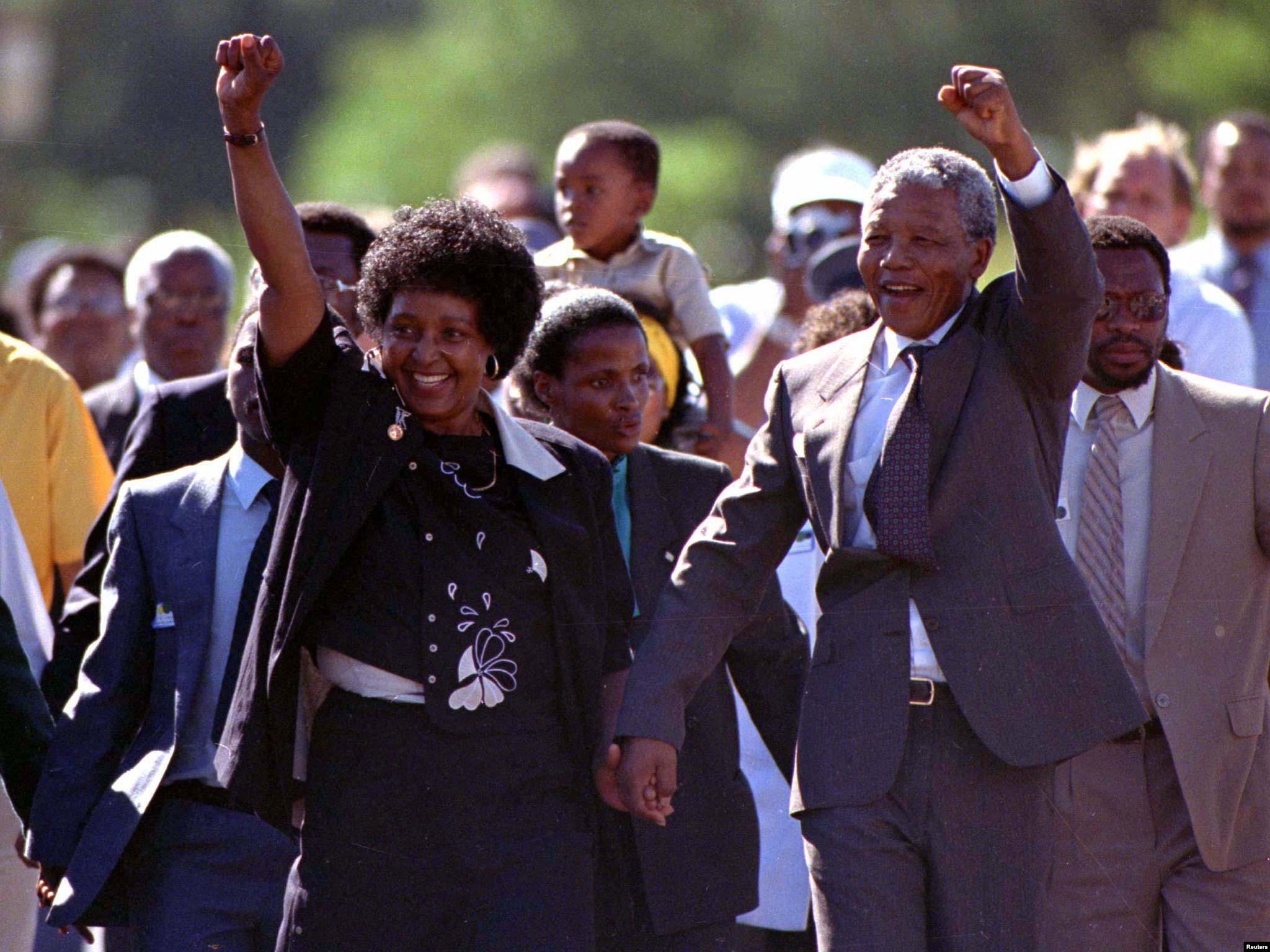
  • Nelson Mandela and his then wife, Winnie, salute well-wishers as he leaves Victor Verster prison on Feb. 11, 1990.

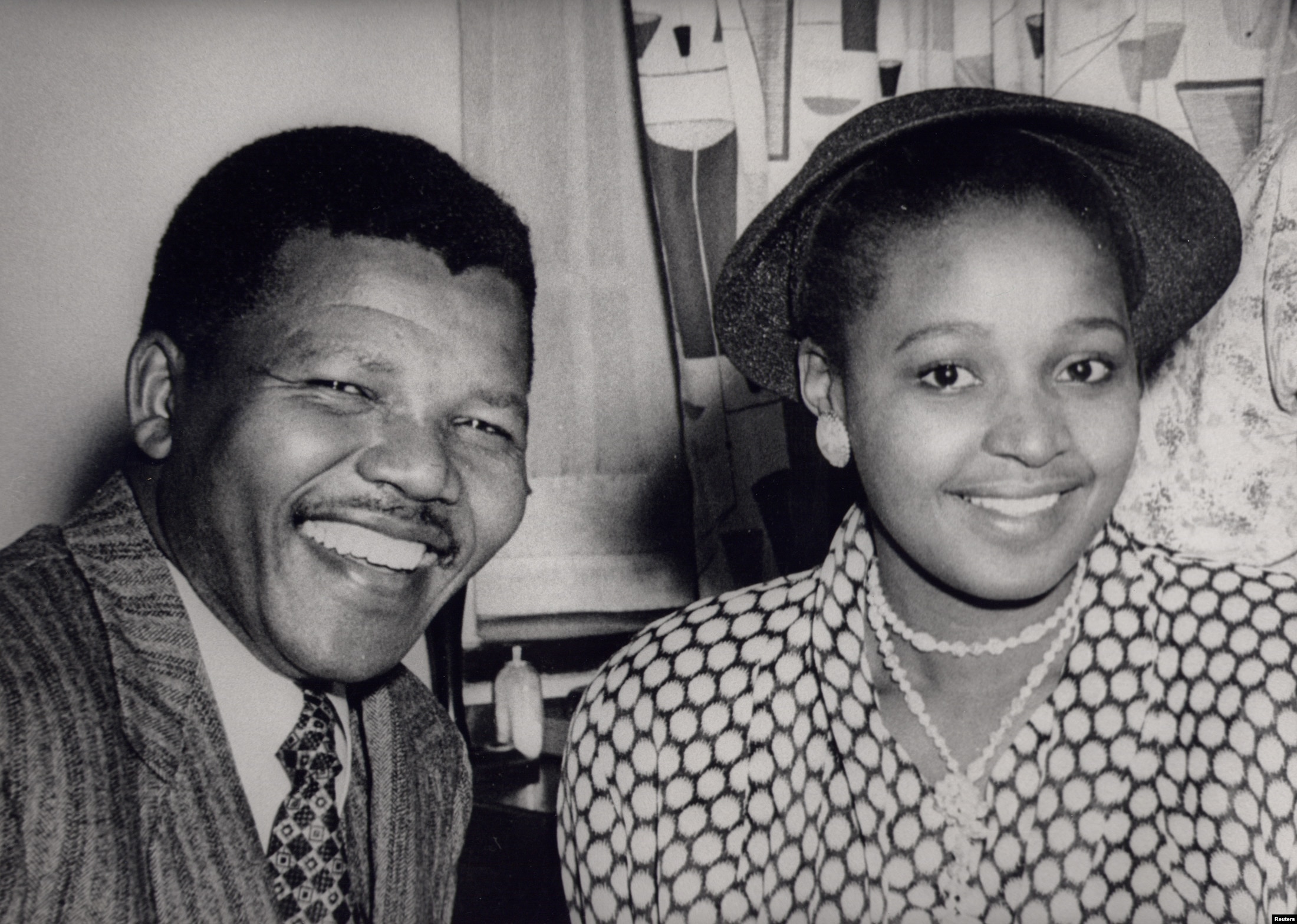
  • This undated photograph shows Nelson Mandela and his former wife, Winnie.

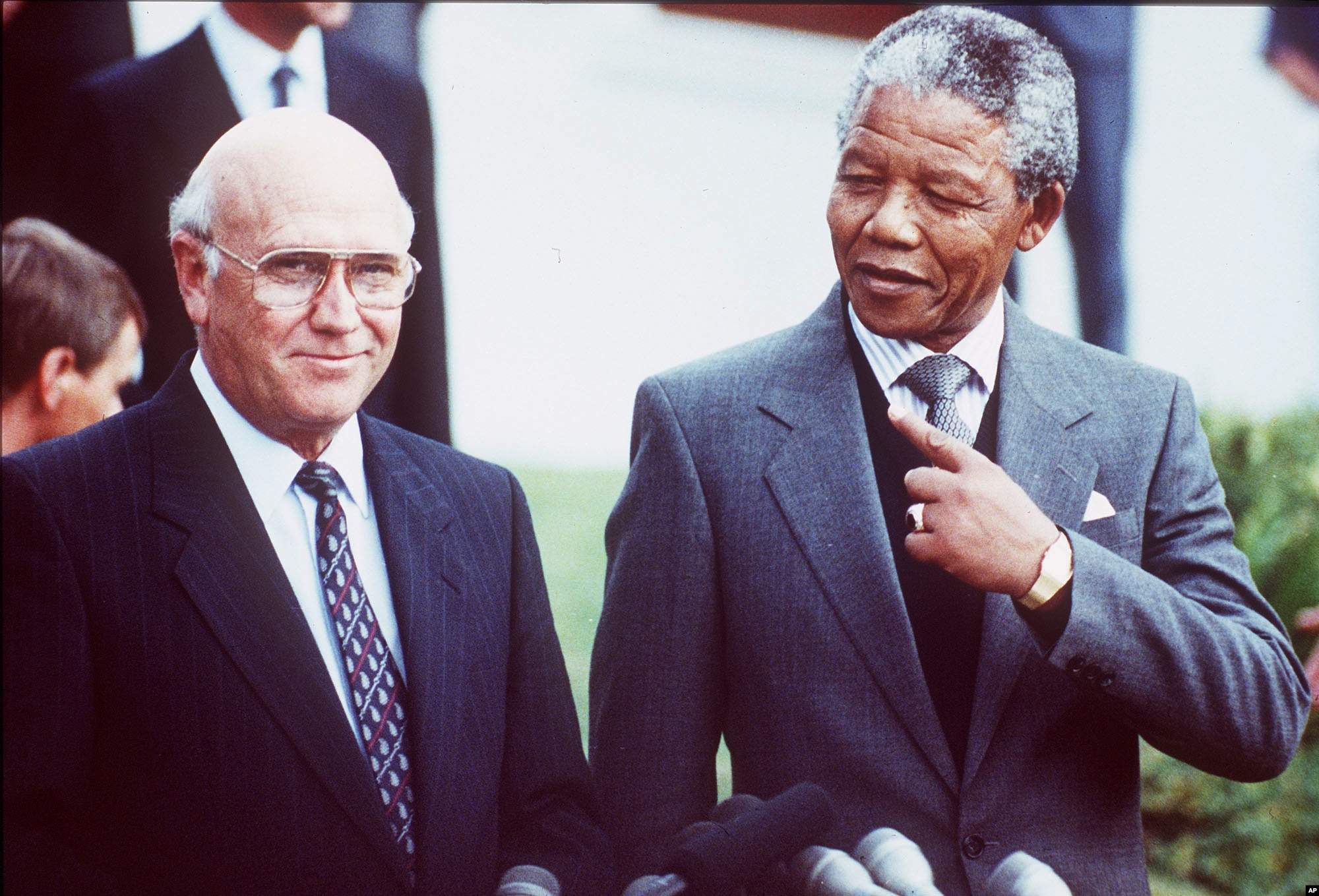
  • South African State President Frederik Willem de Klerk and Deputy President of the African National Congress Nelson Mandela prior to talks, Cape Town, May 2, 1990.

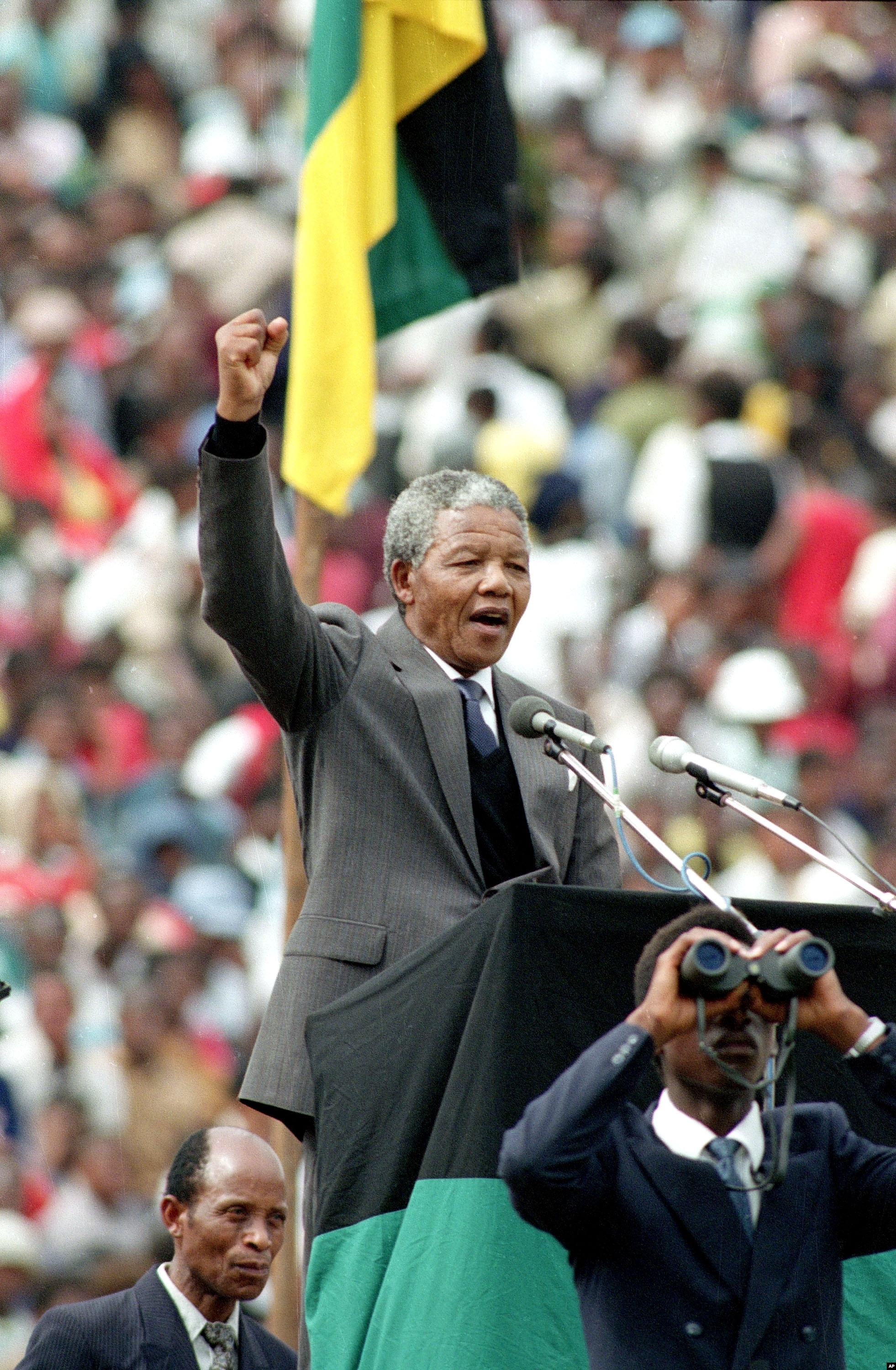
  • Nelson Mandela, is seen as he gives the black power salute to 120,000 ANC supporters in Soweto's Soccer City stadium, Feb. 13, 1990.

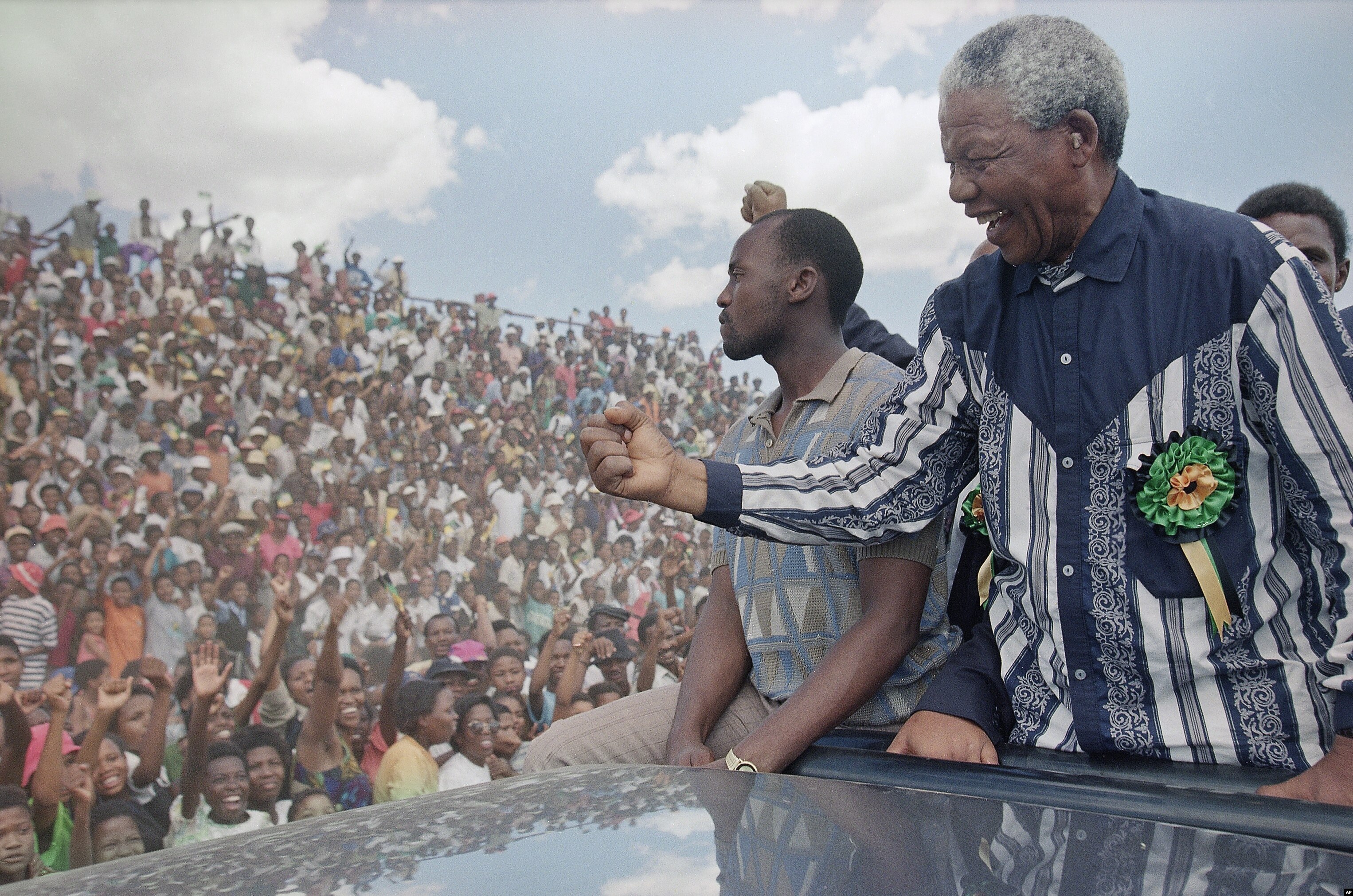
  • Then-African National Congress President Nelson Mandela salutes the crowd in Galeshewe Stadium near Kimberley, South Africa, Feb. 25, 1994.

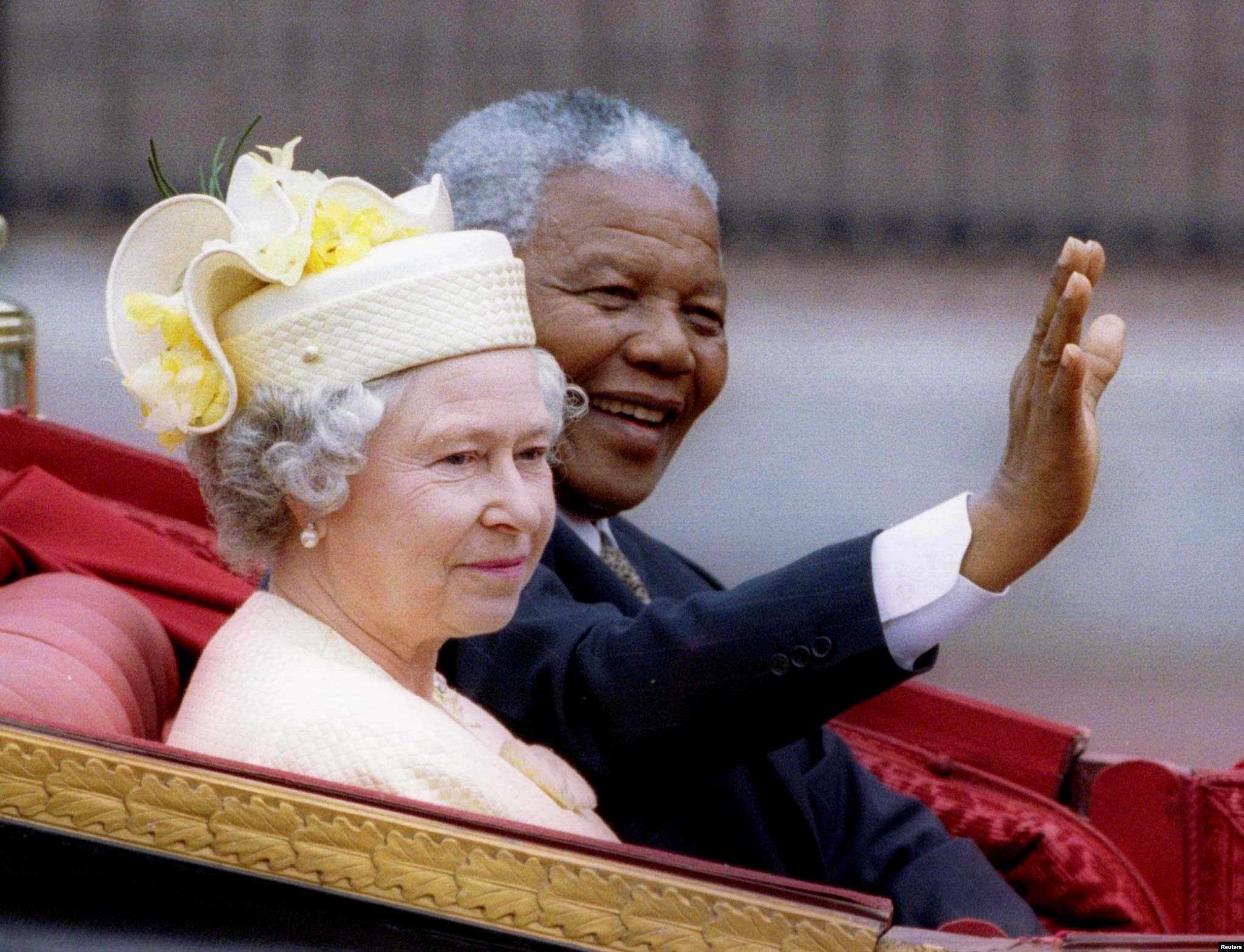
  • Nelson Mandela and Britain's Queen Elizabeth II ride in a carriage outside Buckingham Palace on the first day of a state visit to Britain, July 9, 1996.

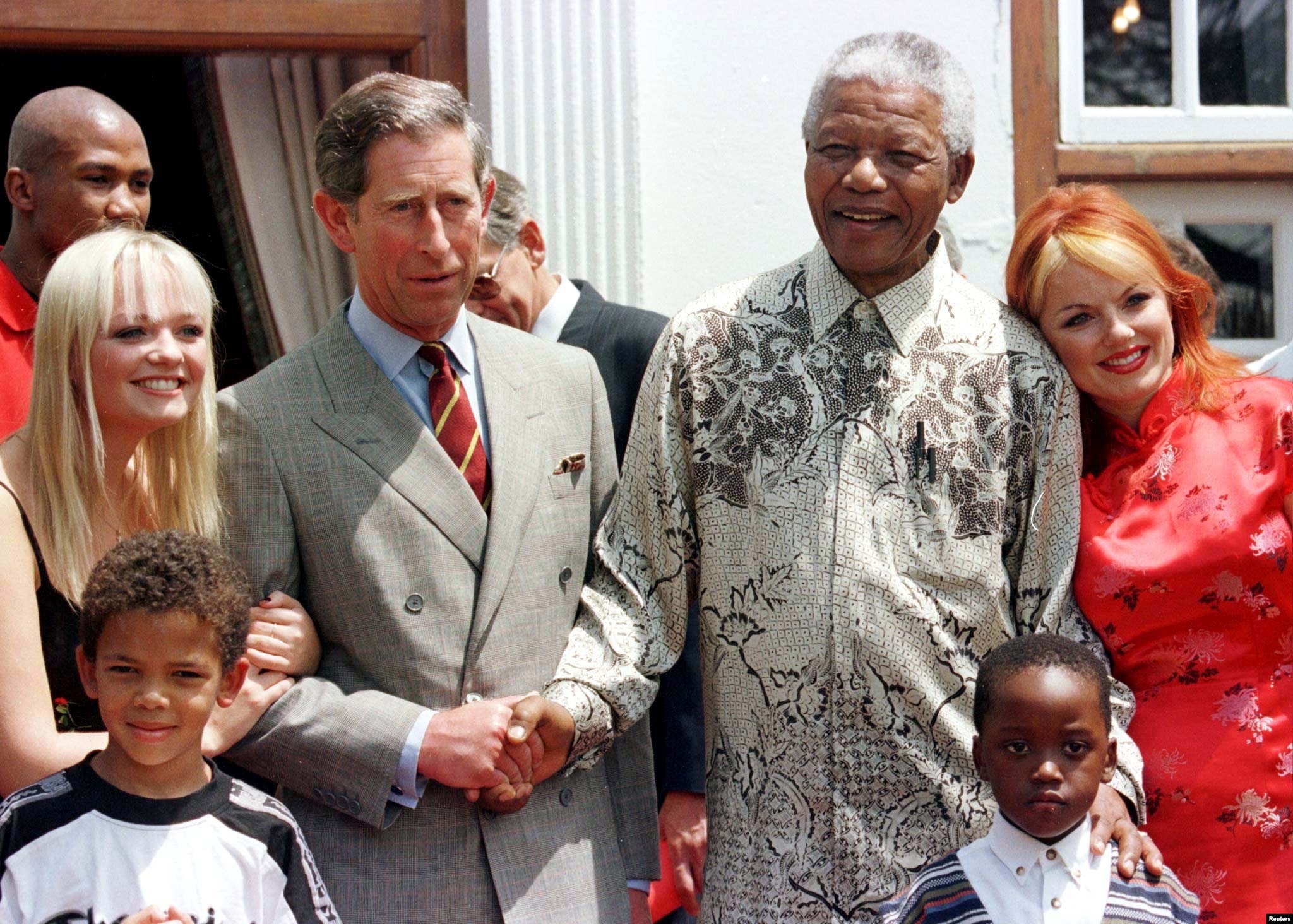
  • President Nelson Mandela and Britain's Prince Charles shake hands alongside members of the Spice Girls, Nov. 1, 1997.

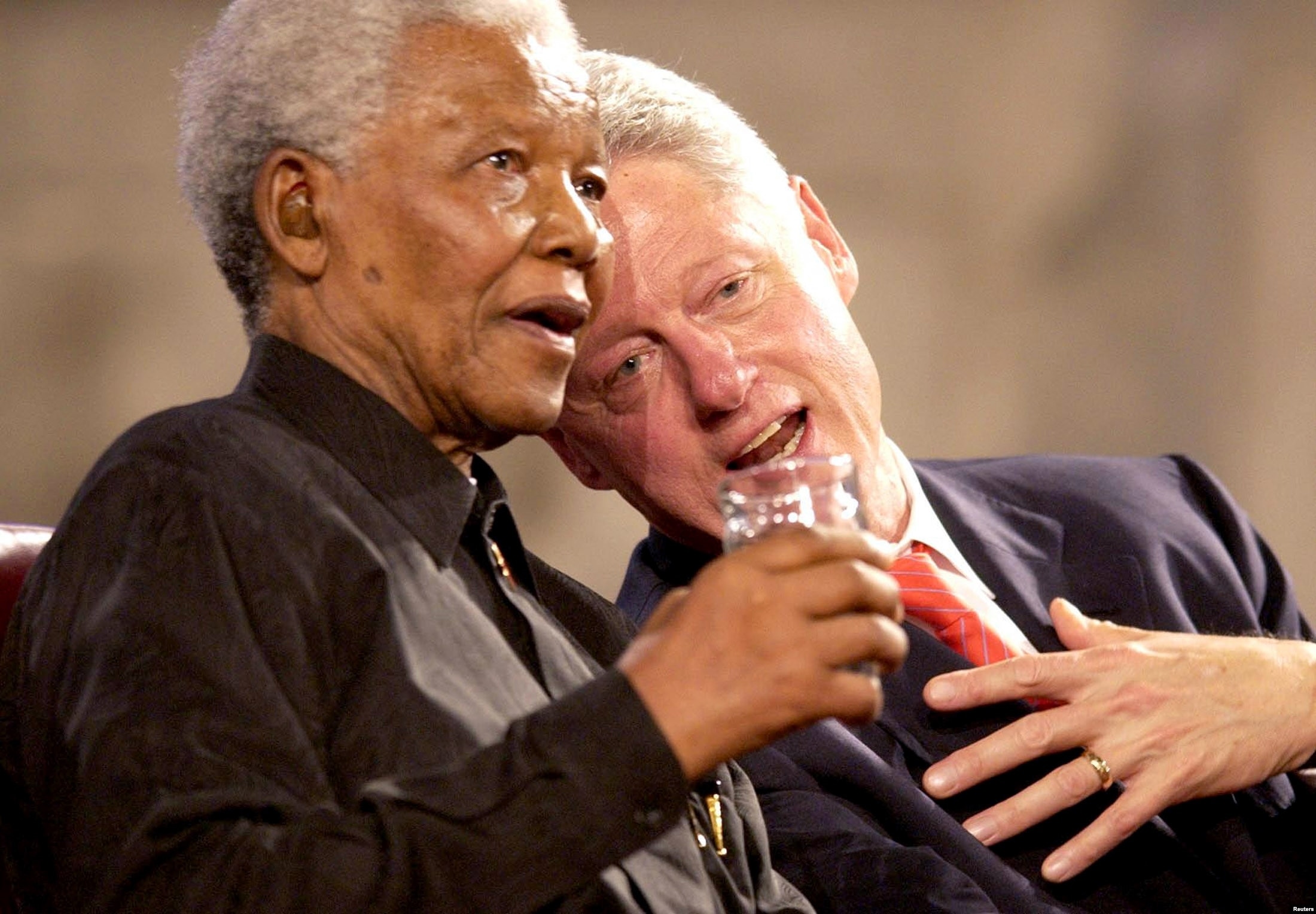
  • Former U.S President Bill Clinton and former South African President Nelson Mandela speak during a Gala night in Westminster Hall, London, July 2, 2003.

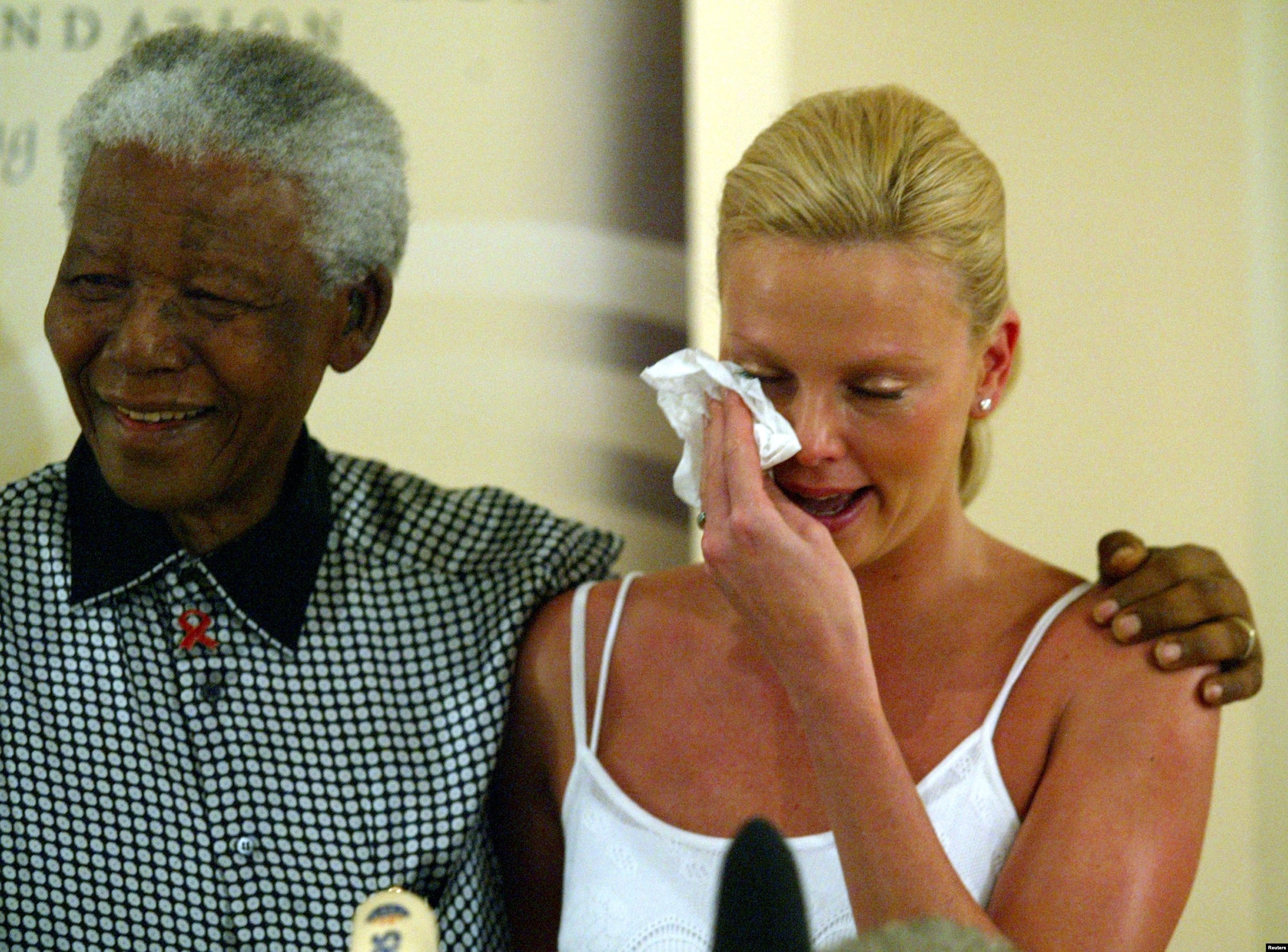
  • Oscar winning South African actress Charlize Theron weeps at her meeting with former South African President Nelson Mandela at the Nelson Mandela Foundation in Houghton, March 11,2004.

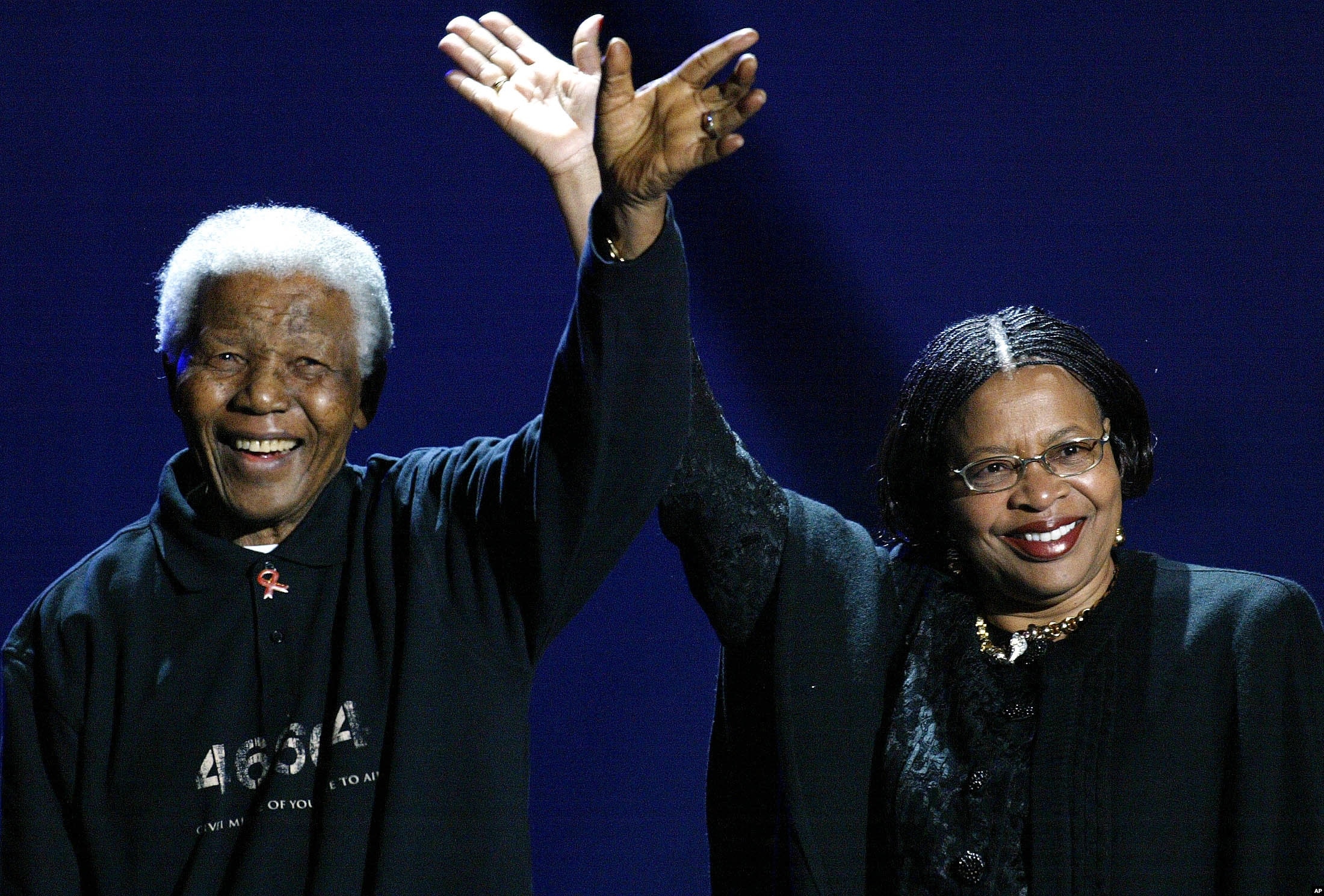
  • Nelson Mandela and his wife, Graca Machel, wave to the audience during a Live 8 concert in Johannesburg, July 2, 2005.

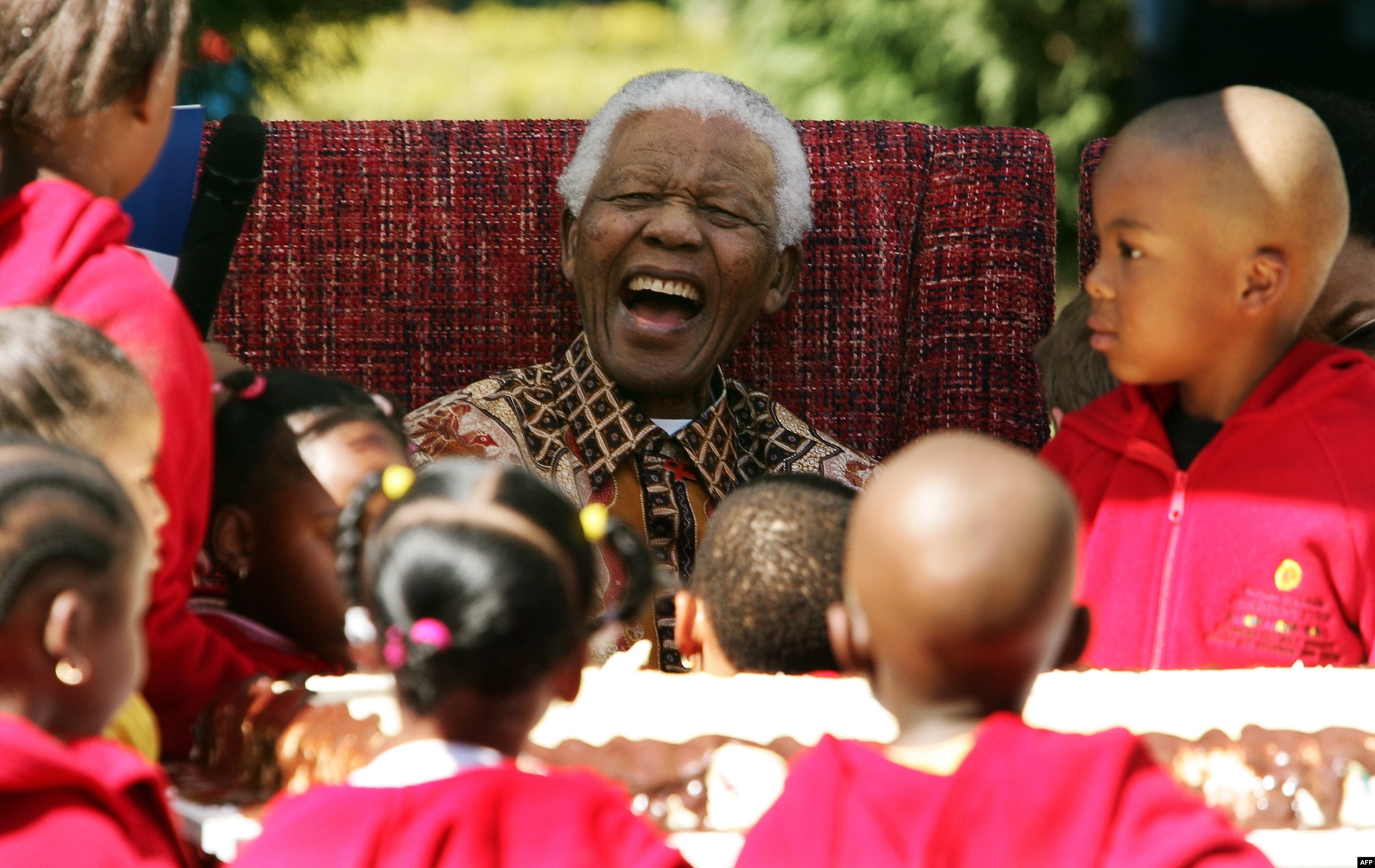
  • Nelson Mandela jokes with youngsters as they celebrate his 89th birthday at the Nelson Mandela Children's Fund in Johannesburg, July 24, 2007.

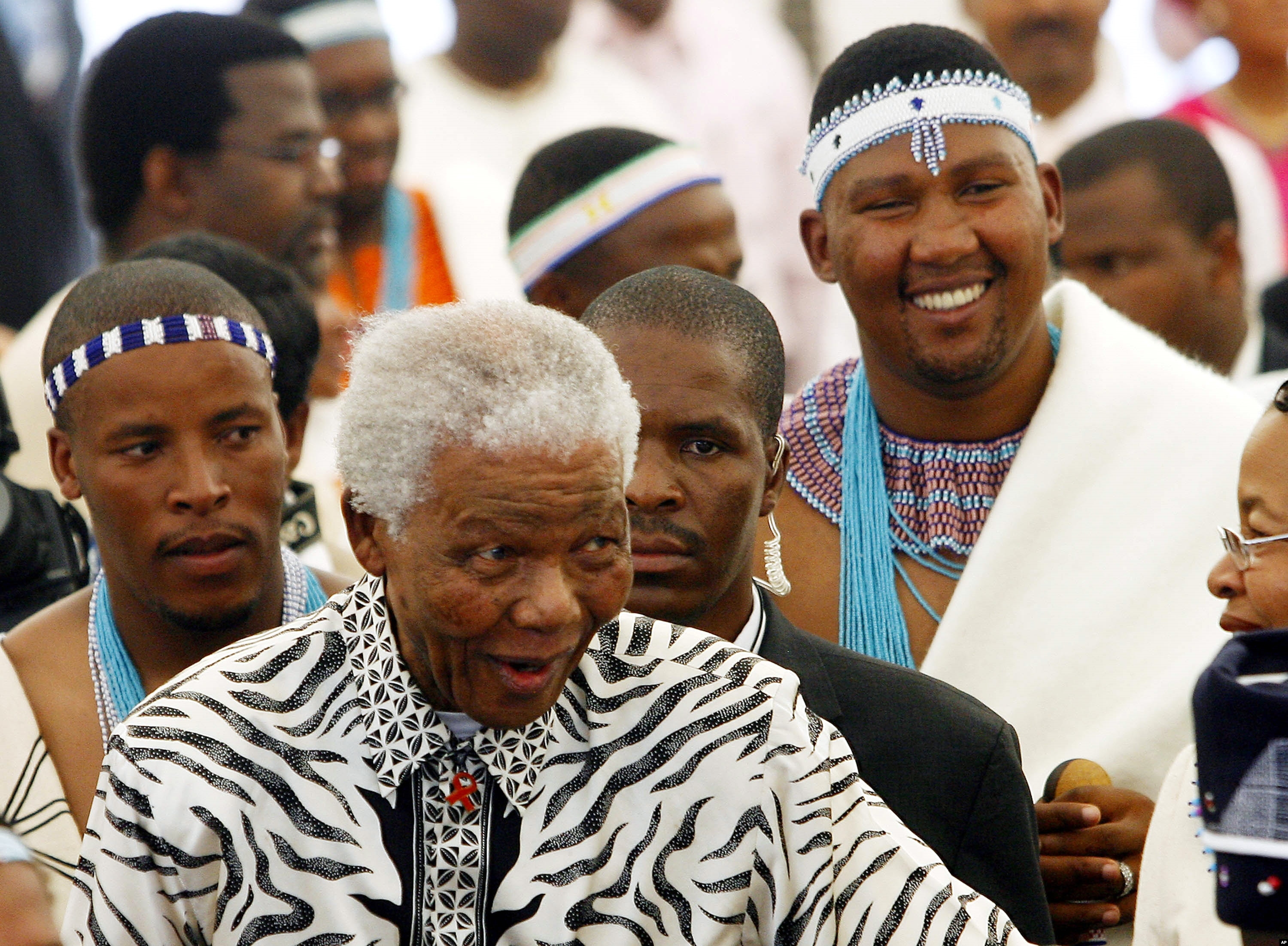
  • Former South African president Nelson Mandela, center, followed by his grandson Mandla Mandela, rear right, arrives at the ceremony in Mvezo, South Africa, April 16, 2007.

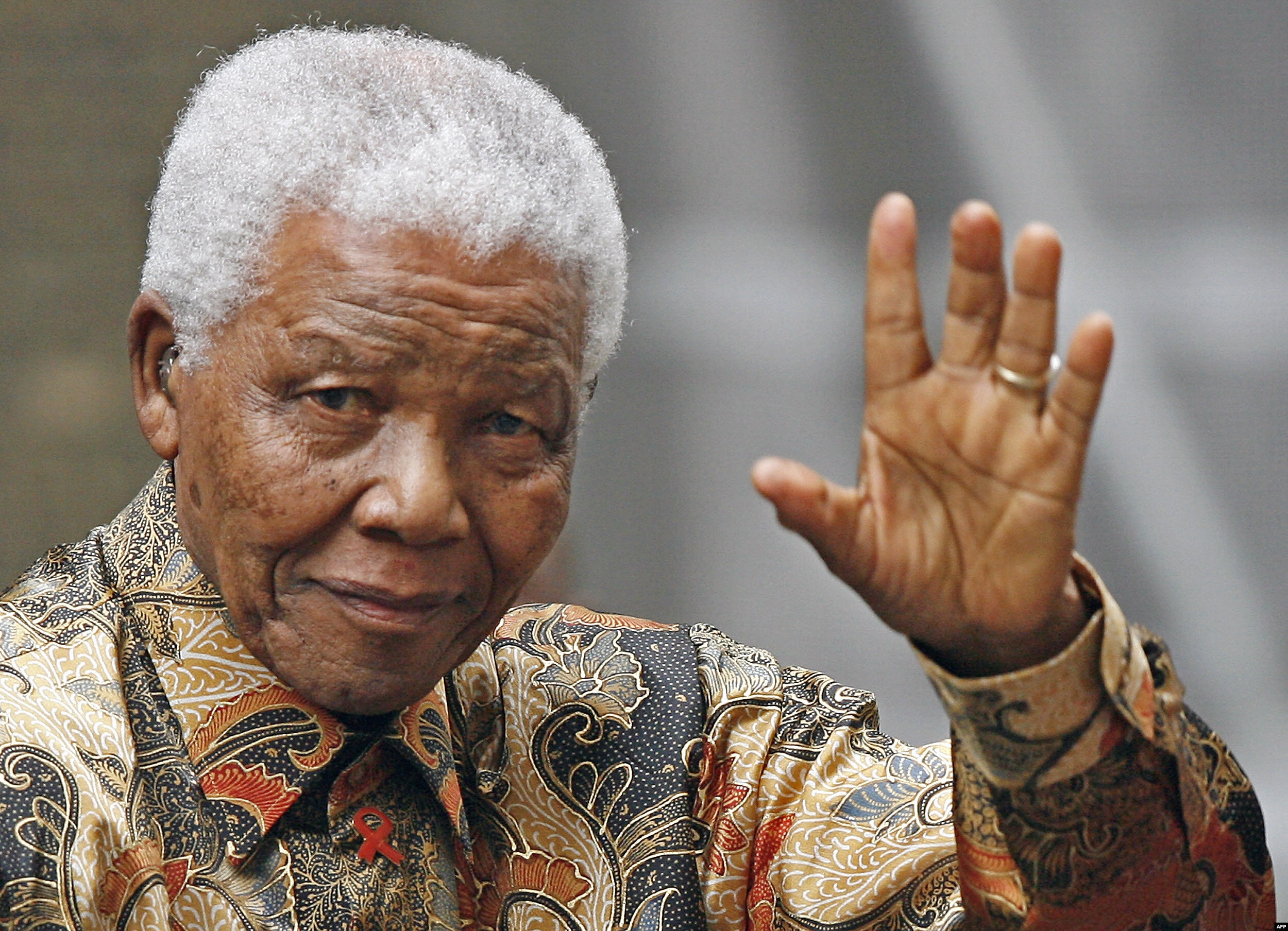
  • Nelson Mandela waves to the media as he arrives outside 10 Downing Street, London, August 28, 2007.

  • Nelson Mandela waves as he arrives to attend the 2010 World Cup football final Netherlands vs. Spain on July 11, 2010 at Soccer City stadium in Soweto.

  • Nelson Mandela poses for a photograph after receiving a torch to celebrate the African National Congress' centenary in his home village Qunu, May 30, 2012.


Vishnu Ramjith, another member of the Melrose Temple, said Mandela was on his mind through the day.

"I've just come from his house now, where we lit a candle and a clay lamp. ….People are just laying wreaths, paying tributes. They are not mourning. They are celebrating," he said.

Ramjith said his faith compelled him to celebrate Mandela's life, rather than mourn the former president's death.

"In Hinduism, we say look, we believe in reincarnation, and we know that a good soul has taken birth somewhere else. There will be other Mandelas born and obviously you will find - like they say, history repeats itself. There will be Mandelas somewhere, sometime, in some other place in the world that will bring salvation to our troubled planet," he said.

After the sadness of Mandela's passing, most South Africans are sharing that sentiment.

Ukrainian protesters topple Lenin statue in challenge to Yanukovich - Reuters

Posted: 08 Dec 2013 08:51 AM PST

People gesture during a rally organized by supporters of EU integration at Maidan Nezalezhnosti or Independence Square in central Kiev, December 8, 2013. REUTERS/Gleb Garanich

(Reuters) - Crowds toppled a statue of Soviet state founder Vladimir Lenin in the Ukrainian capital and attacked it with hammers on Sunday in the latest mass protests against President Viktor Yanukovich and his plans for closer ties with Russia.

The statue's felling - a symbolic rejection of Moscow's power - came after opposition leaders told hundreds of thousands of demonstrators to keep up pressure on Yanukovich to sack his government.

A Reuters reporter at the scene saw the protesters breaking up the statue with hammers after using ropes and metal bars to bring it crashing down.

The demonstrators are furious with the Yanukovich government for its decision to ditch a landmark pact with the European Union in favor of a trade deal with Moscow, Ukraine's Soviet-era overlord.

Yanukovich's sudden tack towards Russia has provoked the biggest street protests since the 2004-5 Orange Revolution, when people power forced a re-run of a fraud-tainted election and thwarted his first run for the presidency.

Sunday's rally marked a further escalation in weeks of confrontation between the authorities and protesters that have raised fears for political and economic stability in the former Soviet republic of 46 million people.

"This is a decisive moment when all Ukrainians have gathered here because they do not want to live in a country where corruption rules and where there is no justice," said world heavyweight boxing champion-turned-politician Vitaly Klitschko.

European Commission President Jose Manuel Barroso urged Yanukovich in a phone call on Sunday to seek a dialogue with his opponents and to respect civil freedoms, the EU executive said. EU foreign policy chief Catherine Ashton will visit Kiev this week to help seek a way out of the crisis, it said.

Interfax news agency said Yanukovich also discussed the situation in Ukraine with U.N. Secretary-General Ban Ki-moon.

Ukraine's opposition accuses Yanukovich, who met Russian President Vladimir Putin on Friday, of preparing to take the country into a Moscow-led customs union, which they see as an attempt to recreate the Soviet Union.

"We are on a razor's edge between a final plunge into cruel dictatorship and a return home to the European community," jailed opposition leader Yulia Tymoshenko said in an emotional message to the crowd, read out by her daughter Yevgenia.

Yanukovich has said he decided to shelve the EU trade deal because it would have been too costly for Ukraine's struggling economy and the country needs more time to prepare for such a move. He says he is preparing a "strategic partnership" with Russia, but has not committed to joining the customs union.

Both countries denied that Putin and Yanukovich discussed the union when they met on Friday in the Russian Black Sea resort of Sochi, but further talks are planned for December 17.

Yanukovich and Putin, who regards Ukraine as strategically vital to Moscow's own interests, are widely believed to have struck a bargain whereby Ukraine will get cheaper Russian gas and possibly credits in exchange for backing away from the EU.

ELECTION DEMANDS

Klitschko, who appears to be emerging as a possible leader-in-waiting, told protesters they would achieve their aim, though he stressed the need to stay peaceful.

Last weekend, riot police beat protesters and journalists, triggering EU condemnation and swelling the protesters' ranks.

"We do not want to be kept quiet by a policeman's truncheon," Klitschko told Sunday's crowd.

He demanded the release of political prisoners, punishment of those responsible for last weekend's crackdown, the resignation of Prime Minister Mykola Azarov's government and early presidential and parliamentary elections.

A group of protesters, chanting "revolution", started erecting tents and barricades near the government building, apparently aiming to halt normal government activity next week. Riot police stood guard nearby.

"We are getting ready for when the police come," said a 22-year-old man draped in a Ukrainian flag who gave his name as Sergei. "We will stay till our demands are met and there is a change of government. We don't want to be under Russia's thumb."

Around 100 protesters erected four tents and two barricades at a separate site near the president's offices.

Independence Square, nucleus of the protest movement, has been transformed into a makeshift village of tents, festooned with national blue and yellow flags and EU flags, beneath a big television screen. People huddle around braziers for warmth.

In a gesture sure to annoy Yanukovich, protesters hoisted a huge portrait of Tymoshenko onto a New Year tree, plastered with anti-government placards, that towers over the square.

The protest camp has been swelled by huge numbers arriving from Ukrainian-speaking parts of western and central Ukraine, where the opposition enjoys strong support.

A Tymoshenko ally, former interior minister Yuri Lutsenko, appealed to people in Russian-speaking areas of the east - the bedrock of Yanukovich's power - to turn out and join the protests. "We are the same people as you are, except that they stole from you earlier," he said.

Sales worker Sviatislav Zaporozhit, 26, said: "The current authorities have been completely discredited by their actions and the police brutality. What unites everyone here is a desire to see a change of government.

"I don't want to go back to what my parents lived under the Soviet Union ... When I am old, I want to live like people in Europe. I want to live in a normal country."

(Additional reporting by Richard Balmforth and Natalia Zinets; Writing by Gareth Jones; Editing by Mark Trevelyan)

Kredit: www.nst.com.my

Sabtu, 7 Disember 2013

NST Online Top Stories - Google News

0 ulasan
Klik GAMBAR Dibawah Untuk Lebih Info
Sumber Asal Berita :-

NST Online Top Stories - Google News


Merrill Newman, deported from North Korea, on plane to California - Los Angeles Times

Posted: 07 Dec 2013 08:55 AM PST

Merrill Newman, the 85-year-old war veteran held prisoner in North Korea for the last six weeks, should arrive back in California on Saturday, a day after being freed, to the relief of his family.

Newman, of Palo Alto, is now on a United Airlines flight bound for San Francisco.

Newman's son, standing outside his home in Pasadena late Friday, thanked those who helped with and prayed for his father's release.

"This is a great moment for us as a family, and it will be even better when we have a chance to be back together in a few hours," Jeffrey Newman said.

"After Merrill comes home and has a chance to get a well deserved rest, we will have more to say about his unusual and difficult journey."

South Africans Prepare For Days of Mourning And Commemoration - New York Times

Posted: 07 Dec 2013 08:38 AM PST

[unable to retrieve full-text content]

New York Times

South Africans Prepare For Days of Mourning And Commemoration
New York Times
JOHANNESBURG — After vigils, celebrations and prayers that lasted into Saturday after the death of Nelson Mandela two days ago, South African leaders prepared for a week of more formal commemorations, which will culminate in a state funeral next ...
Analysis: Mandela's party weakened but survivesUSA TODAY
World leaders prepare to pay final respects to Nelson MandelaCBS News
Nelson Mandela: Emma Williams' Cardiff visit memoryBBC News
Christian Science Monitor -TIME -Houston Chronicle
all 16,132 news articles »
Kredit: www.nst.com.my

Jumaat, 6 Disember 2013

NST Online Top Stories - Google News

0 ulasan
Klik GAMBAR Dibawah Untuk Lebih Info
Sumber Asal Berita :-

NST Online Top Stories - Google News


Memories of Mandela and the country he loved - Los Angeles Times

Posted: 06 Dec 2013 08:26 AM PST

Nelson Mandela: 1918 - 2013

A Times correspondent who was in South Africa during apartheid recalls the day Nelson Mandela walked free and the remarkable years that followed.

December 06, 2013

When I moved to South Africa in 1988, I shared the hope of many correspondents dispatched there: to stay long enough to capture the historic end of apartheid and the release of Nelson Mandela.

Two years later, on a beautiful Sunday afternoon, Mandela was driven by motorcade from his prison in the countryside to Cape Town. I was in the crowd of tens of thousands waiting on the downtown parade grounds. It was exhilarating and a bit frightening. We were packed so tightly that it took all my strength to lift a notebook high enough to write Mandela's first words as a free man, words that appeared in the Los Angeles Times the next day.

"I stand here before you not as a prophet but as a humble servant of you the people.… I therefore place the remaining years of my life in your hands."

My family moved away from South Africa four years later to our next assignment, in Paris. But I felt bound to the country and its destiny for reasons beyond its remarkable transformation: Our children had been born there. Our daughter was a toddler when Mandela walked free. Her younger brother was born during the talks to create a new constitution.

The memories of those early years of Mandela's freedom stayed with me, and I felt compelled to return frequently to see what would happen.

Elsewhere in Africa, the promise of independence had led to economic collapse and human rights abuses. Would Mandela be able to succeed where other leaders in Africa had failed? Could he meet the towering expectations of blacks? Could he keep whites from fleeing?

Our daughter also would feel bound to South Africa. After graduating from college a few years ago, Kate returned to Johannesburg to teach African history, politics and government to high school students. Only recently, I asked her what drew her to South Africa. She was, after all, not quite 5 when we left.

People spend their whole life either running away from where they were born or running toward it … I wanted to run toward it."

— Kate Kraft, on returning to teach in South Africa

She believed the South Africa that Mandela had helped create was a place she could belong.

"People spend their whole life either running away from where they were born or running toward it," she said. "I wanted to run toward it."

A day after Mandela's release, I got my first close-up look at him. He was sitting under a shade tree in Archbishop Desmond Tutu's backyard near Cape Town.

At 71, Mandela walked and talked deliberately, measuring each word like a man used to quiet contemplation. As he answered reporters' questions that morning, it became apparent that he knew his country's future was on the line. And he seemed already to be contemplating a strategy.

He told us he had been heartened by the white South Africans who had lined the roads to greet him the day before.

"I expected that … from blacks, but the number of whites who seem to feel that a change is absolutely imperative surprised me," he said. On the parade grounds, he had urged whites "to join us in shaping a new South Africa. The freedom movement is a political home for you too."

Over the next four years, Mandela would be tested as he and President Frederik W. de Klerk set out to negotiate a new constitution that would unseat the white government that had been in power for four decades and give the black majority a vote for the first time.

Many South Africans — black and white — were in no mood for compromise. The talks often veered perilously close to collapse. Mandela and De Klerk exchanged angry words in public; for long periods, they rarely spoke in private.

Militant black critics of Mandela saw no role for whites in South Africa. Amy Biehl, a young Fulbright scholar from Newport Beach, was killed by a township mob simply for being white. Thousands of blacks died in internecine clashes between Mandela's African National Congress and the Inkatha Freedom Party, which had done business with the white government during apartheid.

On the other side, De Klerk's critics included armed right-wing white militants who vowed to die rather than allow a black government to take power.

Video

CNN: Nelson Mandela freed from prison

South Africa's survival would depend on Mandela's ability to create a society where blacks would have more opportunities but where whites would feel at home as well.

It often seemed that one spark could destroy everything. On a Sunday morning in 1993, three years after Mandela's release, a popular ANC leader named Chris Hani was gunned down in his driveway. The shooter was a white man who had ties to a member of Parliament.

I had met Hani several years earlier in Zambia, where the ANC leadership lived in exile until Mandela's release. He was a leader of the ANC military wing. I asked about a car bomb that had killed two white civilians at a rugby match in Johannesburg. The ANC's policy was not to target civilians.

"It was our operation," he told me, with his usual directness. "And it was wrong."

When he returned to South Africa, his public commitment to negotiating with the white government helped Mandela win over militant ANC members.

Hani's killing paralyzed the nation at a critical moment. Constitutional talks had been suspended and it wasn't clear when, or whether, they would resume.

The country waited to hear how Mandela would respond.

His simple and powerful call for racial unity that night echoed what we had heard under that tree in Tutu's backyard.

"We must not permit ourselves to be provoked by people who seek to deny us the very freedom for which Chris Hani gave his life," he said. "With all the authority at my command, I appeal to all our people to remain calm and to honor the memory of Chris Hani by remaining a disciplined force for peace."

He singled out Hani's white neighbor who had risked her life to call police and provide a description of the assailant.

A year later, as votes were being counted in the election that would make him president, Mandela sat down with reporters. He was in a wistful mood. He spoke fondly of prosecutors, jailers and other white South Africans who, over his life, had extended kindnesses to him.

"People respond in relation to how you treat them," Mandela said. "If you treat them with respect, and ignore the negative aspects, you get a positive reaction. So even before I went to jail for 27 years, I could not afford to be bitter."

When Mandela took office, he had two key goals: show blacks that he would make their lives better and show whites that he would not seek retribution for apartheid.

Instead of an endless search for villains, he created a Truth and Reconciliation Commission so that blacks could air their grievances and whites could confess.

During apartheid, I wrote about a black township called Oukasie, a settlement of 6,000 people that existed to tend to the needs of the 10,000 whites in Brits, a community of tidy homes and brick factories about a half-mile away.

The whites decided that Oukasie was growing too close to the outskirts of Brits. They built a new township, 15 miles down the road, then sent bulldozers to force people to move out of Oukasie. When a court ordered a halt to the bulldozers, the white Brits council cut off water and electricity to the township.

When I returned after Mandela became president, Oukasie had power and water. A new soccer field, tennis courts, library and community center signaled its permanence.

One thing hadn't changed. The secretaries in the town council office were white.

I asked city official Ken Ngubegusha why they had been kept on after blacks took control of the council.

"You can't despise someone who is a professional," he said. "And these women are professionals."

The cover for "South African Gothic" by Scott Kraft, focusing on the Durrs, a farming family in South Africa. Read story »

Even before Mandela walked free in 1990, support for apartheid was waning among younger whites.

I noticed that at the Durr family farm near Cape Town in 1989. The Durrs' teenage daughter Leslee had been expelled from the prestigious Stellenbosch University for leading an anti-apartheid protest. At the time, I wrote about the generational battle between Leslee and her father.

Fifteen years later, I went back to see what had happened to the Durrs. In a story headlined "South African Gothic," I wrote that Leslee had gotten married and had one child. She and her husband remained on the farm, where she ran the family water-bottling operation. She had joined the ANC and was teaching her workers how to fight for better working conditions, even when the target was her own farm.

"My father freaks out when I do that," she told me, laughing. "Any worker agitation is seen as immense disloyalty to the farm."

Still, Leslee's father has become a grudging admirer of Mandela. Once convinced that the ANC despised free enterprise, he has come to believe that Mandela and ANC economic policies had been good for the country and kept it from going the way of neighboring Zimbabwe, where white farms were seized and turned over to blacks, precipitating a financial collapse.

Mandela's example of reaching out to whites, Leslee said, had shown people how they could disagree politically but still get along.

If Nelson Mandela can visit P.W. Botha, then fathers and sons with differences can get along … One doesn't forget, but one forgives."

— Leslee Durr

"If Nelson Mandela can visit P.W. Botha, then fathers and sons with differences can get along," she told me. "One doesn't forget, but one forgives."

Mandela's ability to manage white fear was important, but so was meeting black expectations. They wanted all the benefits of prosperity.

Diale Rangaka, an English literature professor in the Soweto township, and his wife, Malmsey, a clinical psychologist, secretly harbored a desire to be farmers. With the fall of apartheid, they set their sights on a vineyard in the Western Cape, a region 800 miles south of Soweto that was known for its winemaking, an industry controlled by whites before 1994.

When the Rangakas arrived in the Cape, a few miles from Mandela's last prison, getting accepted by white winemakers turned out to be the easy part. Some even mentored them.

The black farmworkers needed convincing. Most of them quit; they wouldn't work for a black boss. A mixed-race foreman resigned. He had another problem; he couldn't work for a woman.

The Rangakas persevered. Today their M'hudi wines, named for the heroine of an African novel who succeeds against the odds, are sold around the world.

On my recent visit, Malmsey poured a taste of M'hudi pinotage and reflected on their post-apartheid journey.

"Our friends back in Soweto keep wondering if we've adopted the 'larney' life" of wealth and leisure, she said. "It's very, very hard work. But we love being on the farm."

One of Mandela's most trusted lieutenants in the months after his release was Cyril Ramaphosa, a burly 37-year-old who had founded the mineworkers union and was much feared by corporate, white South Africa.

Video

Scott Kraft talks about covering Nelson Mandela

Back then, on the wall of his office, he kept a framed newspaper editorial cartoon that summed up his reputation. It showed him trying to ride a horse, labeled "the economy," that he had just shot dead. "That'll teach you," he says. "Now, giddyap!"

I had expected that Ramaphosa would be Mandela's successor. He had earned a reputation for pragmatism. His white adversaries in constitutional talks respected his willingness to compromise.

When the party passed him over for Thabo Mbeki as Mandela's heir-apparent, Ramaphosa left politics.

Today, he's probably South Africa's richest man, with investments in mines, energy, real estate and telecommunications. Forbes puts his net worth at $675 million.

A few months ago Ramaphosa, now 60, was elected deputy president of the ANC, the likely successor to Jacob Zuma, a polarizing figure who has successfully battled rape and corruption charges in recent years.

Will he have a chance to continue Mandela's legacy? And if so, will he be able to advance it?

Mandela's successors have struggled to build on what he started. Millions still live in poverty. Crime and government corruption remain problems.

But unlike other leaders who cling to power, Mandela stepped down after one term, and his successors came to power in democratic elections that were a model for Africa.

On a trip to South Africa earlier this year, my wife and I spent several days visiting classes at African Leadership Academy, where Kate had taught for three years. Unwilling to give up what she calls the best job in the world, Kate decided to return for a fourth year.

The campus near Johannesburg is serene, with a rolling lawn encircled by red-bricked classrooms and dorms. The boarding school was opened in 2008, and its 200 students come from dozens of countries on the African continent.

The two-year curriculum includes the usual high school subjects, but it pays special attention to learning about Africa and entrepreneurship. Many of the students will head to universities in the United States — but each signs a pledge to return after graduation to help build Africa.

They will take the path that Mandela began clearing on that Sunday afternoon in Cape Town almost 24 years ago and, like Kate, run toward the place they were born.

Contact the reporter

Follow Scott Kraft (@LATimeskraft) on Twitter

Challenged by Tea Party, Veteran Mississippi Senator Decides to Run for ... - New York Times

Posted: 06 Dec 2013 08:48 AM PST

WASHINGTON — Thad Cochran, a Mississippi Republican who was first elected to the Senate in 1978, set up a generational and ideological clash in the state's Republican primary when he announced Friday that he would seek a seventh term in 2014.

While Mr. Cochran, who turns 76 on Saturday, has the support of many leading Republicans in the state, he is already facing opposition from Chris McDaniel, 41, a state senator aligned with the Tea Party who announced his candidacy in October and has won the support of some conservative groups.

Mr. Cochran, who has raised less than $1 million for his re-election, had been thought to be leaning toward retirement. But Mississippi Republicans said they believed Mr. McDaniel's challenge and pleas from powerful figures across the state that Mr. Cochran seek another term prompted the senator to mount what will probably be his final campaign.

There is also the prospect of Mr. Cochran reclaiming the chairmanship of the Senate Appropriations Committee if Republicans win back the Senate.

The primary could be the toughest race of his career. Mr. Cochran has faced little opposition in his 34 years in the Senate, routinely winning re-election by large margins over little-known Democrats. But the primary could offer insight into fundamental questions about the Republican Party: whether longevity and clout in a Deep South state that has traditionally venerated such qualities are enough to overcome national trends toward limited-government conservatism.

With some conservatives determined to replace Republicans like Mr. Cochran, he must appeal to elements of the primary electorate that prefer a more ideologically pure senator.

Mr. McDaniel has sought to seize on the new anti-spending fervor, casting Mr. Cochran — who has delivered billions of dollars in federal spending projects to his impoverished state — as an avatar of a bygone political culture.

"The national debt is the greatest moral crisis of this generation," Mr. McDaniel said in announcing his candidacy in October. "So, let's go forth from this place making it perfectly clear that the era of big spending is over. The age of appropriations must end."

Mr. McDaniel has already gotten help in making this case from some conservative groups like the Club for Growth, which is already airing ads in the state praising him as "the new strong conservative leader Mississippi needs in the U.S. Senate."

But Mr. Cochran is a formidable figure in a state that has long relied on federal largess and that rarely turns over its Senate seats. He will have the support of Mississippi's political and business establishment, which are deeply worried about what losing Mr. Cochran would mean to a state that, without him, would have little seniority in its congressional delegation.

Leading Republicans in the state have already begun training their fire on Mr. McDaniel.

"Senator Cochran's opponent's record as state senator and his trial lawyer practice are something that the voters of Mississippi will want to take a closer look at, because it's very different than the commercials that are being funded by out-of-state special interest money," said Henry Barbour, a well-connected state lobbyist and member of the Republican National Committee. "I certainly will do all I can to help make sure Senator Cochran is re-elected."

This article has been revised to reflect the following correction:

Correction: December 6, 2013

An earlier version of this article stated incorrectly the age of Senator Thad Cochran, as well as the number of the term he is seeking. He will be 76 on Saturday; he is not 76. And he is seeking a seventh term, not a sixth.

Kredit: www.nst.com.my

Khamis, 5 Disember 2013

NST Online Business Times : latest

0 ulasan
Klik GAMBAR Dibawah Untuk Lebih Info
Sumber Asal Berita :-

NST Online Business Times : latest


Ringgit opens higher against US dollar

Posted: 05 Dec 2013 06:03 PM PST

The ringgit rebounded to open higher against the US dollar in early trading today on fresh demand after depreciating over the
last three days, dealers said.

At 9am, the ringgit was quoted at 3.2220/2250 against a US dollar from 3.2250/2290 close yesterday.

A dealer said investors may see the lower ringgit as an opportunity for them to book profit ahead of the weekend.

The local unit slipped against the yen to 3.1604/1639 from 3.1590/1641 yesterday and fell against the Singapore dollar to 2.5677/5722 from 2.5685/5737 Thursday.


The domestic currency however strengthened against the British pound to 5.2638/2693 from 5.2838/2917 yesterday but eased against the euro to 4.4019/4070 from 4.3873/3937 Thursday.-- Bernama

Short-term rates to remain stable

Posted: 05 Dec 2013 05:58 PM PST

Short-term interbank rates are expected to remain stable today following Bank Negara Malaysia's intervention to reduce excess liquidity from the financial system.

The central bank estimated today's liquidity at RM27.21 billion in the conventional system and RM13.52 billion in Islamic funds.

The bank will conduct a RM10 billion range maturity auction tender for three to 90 days and two repo tenders comprising RM150 million for 31 days and RM250 million for 62 days.

A RM6.3 billion Al-Wadiah tender for four to 90 days will also be conducted along with two Commodity Murabahah Programme tenders comprising RM100 million for 21 days and RM200 million for 31 days.

At 4pm, the bank will undertake a conventional overnight tender of up to RM16.8 billion and a RM7.3 billion Al-Wadiah overnight tender.-- Bernama
Kredit: www.nst.com.my

NST Online Top Stories - Google News
0 ulasan
Klik GAMBAR Dibawah Untuk Lebih Info
Sumber Asal Berita :-

NST Online Top Stories - Google News

'Very much loved' American teacher Ronnie Smith slain in Benghazi - NBCNews.com

Posted: 05 Dec 2013 08:25 AM PST

By Charlene Gubash, Alexander Smith and Henry Austin, NBC News

A beloved American teacher was shot dead in the Libyan city of Benghazi on Thursday, just days before he was supposed to return to the U.S. for the holidays, the school's principal said.

Ronnie Smith, 33, had been teaching chemistry at the International School Benghazi for about 18 months and was "very much loved," principal Peter Hodge told NBC News.

"He was the most amazing person, more like a best friend or a family member," said student Yomna Zentani, 18.

"After everything that happened in Libya, we were losing hope and he was the only one who was supporting us, motivating us, telling us that as long as we studied everything would be okay. He was the silver lining.

"He dedicated so much of his time for all his students," she added. "He chose to come here and help us and risk his life."

Smith began working at the school after a stint in Egypt, she said.

"He was going back home to see his mom and his family where he hadn't been for some time. He was supposed to leave this week but he said he would stay around for our midterms and sent his family. He was going to join them."        

Lujain Beruwien, 16, said Smith had helped her get settled in Benghazi when he Libyan parents moved back from Scotland.

"Because I'm from the U.K. and he's from America we were always trying to outdo each other," she said. "It's really upsetting that he has died. The majority of Libyans want the country to develop but the others are just trying to ruin things for everyone. We're not going to stand for this."

Adel Mansour, a former principal at the school who is currently head of its board of governors, described Smith as a "great guy."

"He loved being in Benghazi and he loved Libya and the kindness of its people," Mansour told NBC News. "He was looking forward to going back and being with his family [to the U.S. for Christmas] but unfortunately now that's not going to happen." 

Security official Ibrahim al-Sharaa told The Associated Press that the victim was jogging near the U.S. Consulate at the time of the shooting. NBC News was unable to independently confirm that account.

The independent report commissioned by Secretary of State Hillary Clinton investigating the attack on the U.S. Embassy in Benghazi faulted the State Department for "systematic failures" and "grossly inadequate" security to deal with the attack. NBC's Andrea Mitchell reports.

Benghazi, Libya's second-largest city, became a political flashpoint following the Sept. 11, 2012 attack targeting the U.S. Consulate which left Ambassador Chris Stevens and three other Americans dead. A hardline Islamist group known as Ansar al-Shariah has been blamed.

Two years after the NATO-backed uprising that ousted Moammar Gadhafi, Libya is still in messy transition, with no new constitution, a temporary government and nascent security forces struggling to contain militias and former rebels.

In October, Islamist militants called for the kidnapping of U.S. citizens in Libya and targeted attacks on American property following a raid by U.S. special forces to seize a suspected al Qaeda leader from his home in Tripoli.

Last week, Libya's army clashed with militants in Benghazi, where Islamists run their own checkpoints in the port city and assassinations and bombings happen regularly.

At least nine people died when fighting broke out between army special forces and members of Ansar al-Shariah.  

Oil workers, civil servants and private sector staff later went on a three-day strike in the port city, protesting against the deteriorating security situation.

The mass walkout was the latest sign of growing anger against militias who helped oust Gadhafi. Most groups have kept their weapons and regularly challenge the fragile new government and its security forces.

Most countries closed their consulates in Benghazi after a series of attacks and some foreign airlines have stopped flying there. 

In the wake of recent clashes in Tripoli which left more than 40 people dead, Secretary of State John Kerry last month urged Libyans to "break the cycle of violence through respectful dialogue and reconciliation."

He added: "Too much blood has been spilled and too many lives sacrificed to go backwards."

NBC News' David Wyllie and Tracy Connor, Reuters and The Associated Press contributed to this report. 

Goran Tomasevic / REUTERS

An uprising in Libya ousts dictator Moammar Gadhafi.

Related:

This story was originally published on

Former LAPD Chief William Bratton returns to NYPD commissioner post - Los Angeles Times

Posted: 05 Dec 2013 08:14 AM PST

NEW YORK -- New York City Mayor-elect Bill de Blasio named William J. Bratton to return as the city's police commissioner Thursday, selecting the former LAPD police chief to head a department praised for overseeing a drop in crime but criticized for its use of racially charged stop-and-frisk tactics.

Bratton had been expected to get the job, which has been held since 2002 by Raymond Kelly. De Blasio, who will take office in January at the end of Michael Bloomberg's third and final term, was a harsh critic of Kelly and vowed to replace him if elected.

In a statement issued prior to a news conference announcing the appointment Thursday, De Blasio called Bratton a "proven crime-fighter."

"He knows what it takes to keep the city safe," the mayor-elect said.

For his part, Bratton said in a statement that "De Blasio's priorities are my priorities."

People familiar with the decision had already begun reacting to it before the news briefing.

The Rev. Al Sharpton, an activist in the African American community, said he spoke with De Blasio on Tuesday about his selection of Bratton, who also served under New York Mayor Rudolph Giuliani in the 1990s.

Sharpton said he had a "very distant and adversarial relationship" with Bratton when he served in New York, but that their relations improved as Bratton served in Los Angeles and the two worked together on gang violence and police misconduct issues.

"Mr. Bratton knows my concerns and the concerns of others about racial profiling in stop and frisk policing, but at the same time is aware of our desire to continue the decrease of violence and crime in our community," Sharpton said in a statement.

Bratton's time as NYPD's top cop made him an international figure, so by the time he came to Los Angeles in 2002, he was already a law enforcement superstar who had appeared on the cover of Time magazine in the '90s for his success in New York. He served as LAPD chief until 2009.

ALSO:

Nearly 1 in 5 live in poverty in Southern California, study finds

Sub-freezing temperatures expected as cold air mass grips region

Paul Walker death: Coroner plans more tests before autopsy complete

tina.susman@latimes.com

Twitter@tinasusman

joseph.serna@latimes.com

Twitter: @josephserna

Susman reported from New York. Serna reported from Los Angeles.

Kredit: www.nst.com.my
 

NST Online

Copyright 2010 All Rights Reserved