Isnin, 17 Mac 2014

NST Online Top Stories - Google News

0 ulasan
Klik GAMBAR Dibawah Untuk Lebih Info
Sumber Asal Berita :-

NST Online Top Stories - Google News


Obama Announces Sanctions Against Russia - Voice of America

Posted: 17 Mar 2014 09:09 AM PDT

Announcing that the U.S. and its allies are mobilizing to isolate Russia, President Barack Obama has imposed sanctions on key individuals Washington deems responsible for the current crisis in Ukraine following a Moscow-backed referendum in Crimea on the peninsula's secession from the country. 

Speaking at the White House, Obama announced that he ordered sanctions against 11 Russian and Ukrainian officials, including two top advisers to Russia's President Vladimir Putin, in addition to ousted Ukrainian President Viktor Yanukovych. All will be subject to asset freezes.

In an executive order issued earlier, Obama said that the policies and actions of the Russian Federation have been found to "undermine democratic processes and institutions in Ukraine; threaten its peace, security, stability, sovereignty, and territorial integrity; and contribute to the misappropriation of its assets, and thereby constitute an unusual and extraordinary threat to the national security and foreign policy of the United States."

Watch the president's announcement:


He said Washington stands ready to impose further sanctions if necessary, if Russia chooses to escalate the situation.

Obama also pledged "unwavering" U.S. support for Ukraine, following Crimea's moves toward joining the Russian Federation.

President Obama's Steps to Support Ukraine and Isolate Russia
  • Imposing sanctions on those responsible for undermining Ukraine's government and territorial integrity
  • Expanding scope of sanctions to include Russian officials
  • Continuing consultations with European partners, who imposed their own sanctions
  • Warned Russia that continued provocations in Crimea will result in further isolation
  • Sending US Vice President Joe Biden to Europe to meet with allies
  • President Obama traveling to Europe for talks next week
Obama said Vice President Joe Biden leaves for Europe later Monday to discuss the situation with NATO allies. The president himself is slated to to go Europe next week.

EU measures

Separately, European Union foreign ministers have agreed to impose sanctions including travel bans and asset freezes on 21 officals from Russia and Ukraine, Lithuania's foreign minister said on Monday.

After a meeting lasting around three hours, the EU's 28 foreign ministers quickly reached agreement on the list of those to be sanctioned for their part in Russia's seizure of Crimea and Sunday's referendum to secede from Ukraine and join Russia.

The EU Foreign Affairs Council just agreed on sanctions – travel restrictions & assets freezes against 21 officials from Ukraine & Russia, Linan Linkevicius wrote in a message on Twitter.


He added that more measures would follow in a few days, when EU leaders meet for a summit in Brussels. They are expected to expand the list to include more senior figures closer to Russian President Vladimir Putin.
 
In addition to responses from the U.S. and the EU, NATO released a statement Monday calling the Crimea referendum "illegal and illegitimate." It said the vote violates the Ukrainian constitution and international law, and added that the circumstances under which the referendum was held were "deeply flawed and therefore unacceptable."

Despite objections from the international community, a delegation of Crimean lawmakers is traveling to Moscow Monday to discuss additional procedures required to become part of the Russian Federation. There is broad speculation that President Putin will deliver a formal speech Tuesday on Crimea's annexation to Russia, Reuters quoted a U.S. official as saying.

Secession vote

Earlier Monday, Crimea's regional assembly declared independence from Ukraine and applied to become part of Russia, a day after a controversial referendum in Crimea overwhelmingly supported joining the Russian Federation.   

A delegation of Crimean lawmakers is set to travel to Moscow Monday to discuss additional procedures required to become part of the Federation.

​President Barack Obama told his Russian counterpart Vladimir Putin Sunday that Washington and its "European partners are prepared to impose additional costs" on Moscow for backing the secession referendum in Ukraine's Crimean peninsula.

A White House statement called Sunday's referendum illegal and said it violates Ukraine's constitution. It also said the vote will "never be recognized by the United States and the international community."
 
Crimea's election chief announced Monday that nearly 97 percent of voters cast ballots supporting secession and a move to join Russia.
 

x

Crimea Referendum Results
In Kyiv, Ukraine's interim Prime Minister Arseniy Yatsenyuk - speaking at an emergency cabinet meeting - called the Moscow-backed Crimea vote "a circus spectacle" directed at gunpoint by Russia.
 
Ukraine's parliament endorsed on Monday a plan to mobilize 40,000 reservists to counter Russia's "blatant aggression" in  Crimea. Some 20,000 of the country's national guard troops have also been mobilized.

Also on Monday, Ukraine recalled its ambassador to Russia for consultations.

"In connection with the situation in Crimea and the necessity of discussing some of its international aspects, the Ukrainian side is recalling its ambassador to the Russian Federation, Volodymyr Yelchenko," the Foreign Ministry in Kyiv said.

Russian Duma set to act

Meanwhile, Russia's lower house of parliament will pass legislation allowing Ukraine's Crimea region to join Russia "in the very near future", Interfax news agency quoted the chamber's deputy speaker as saying on Monday.
      
Russian President Vladimir Putin has said he will respect the will of the people in Crimea, ignoring Western leaders who say the referendum was illegal because Russian forces have seized the southern region.
      
"The results of the referendum in Crimea clearly showed that residents of Crimea see their future only as part of Russia," the deputy speaker of the State Duma, Sergei Neverov, was quoted as saying.
      
Duma officials claim the Black Sea peninsula can become a member of the Russian Federation under current legislation, specifically under a law "On the procedure for the adoption into the Russian Federation and education of new subjects of the Russian Federation" that was passed in 2001, Interfax said.
      
Russia rejects UN report

Russia rejected as biased on Monday an assessment by a United Nations official who questioned accusations that Ukraine's Russian-speaking population faced systematic human rights abuses.

The Russian Foreign Ministry statement criticized U.N. Assistant Secretary General for Human Rights Ivan Simonovic who said last week there had been violations against ethnic Russians in Ukraine but said there was no evidence they were "widespread or systematic."

The biased, prejudiced and unobjective assessment of I. Simonovic on the human rights situation in the country calls forth surprise and confusion," said the ministry in a statement.

Russia has effectively seized control of Ukraine's broadly Russian-speaking Crimea region. There are also large Russian-speaking populations in the east of the country.

The statement also criticized Simonovic for a statement of concern over the state of human rights for ethnic Tatars in Crimea.

Russia has been justifying its incursion into Crimea as necessary to protect the rights of ethnic Russians living on the peninsula.

Reactions in Kyiv

Thousands of Ukrainians gathered in central Kyiv Sunday to voice opposition to the referendum and what the perceive as Moscow's moves to divide the Ukraine.

But the mood was somber as many Ukrainians feel helpless against Russia's might and military superiority, many fearing a further escalation of tensions.

Irina, a restaurant manager who only gave her first name, said Crimea's fate likely was already decided in Moscow.

She said none of this was right. This could have been done in a nice way, in an honest way, she said. This could have been done in a constitutionally correct way. And it seems to me, she said, everyone would have agreed to that.

Moscow claims it is protecting ethnic Russians from persecution by Ukrainian "extremists" who it says illegitimately came to power after months of anti-government protests.

Another Kyiv resident, Ira, who also only gave her first name, said she had nothing against Russians.

She said she loves and respects the Russian people as much as Ukrainians, but not their government. She expressed hope that everything ends well, everyone becomes united, and that Crimea remains with Ukraine.

VOA's Daniel Schearf contributed to this report from Kyiv. Some reporting by Reuters.

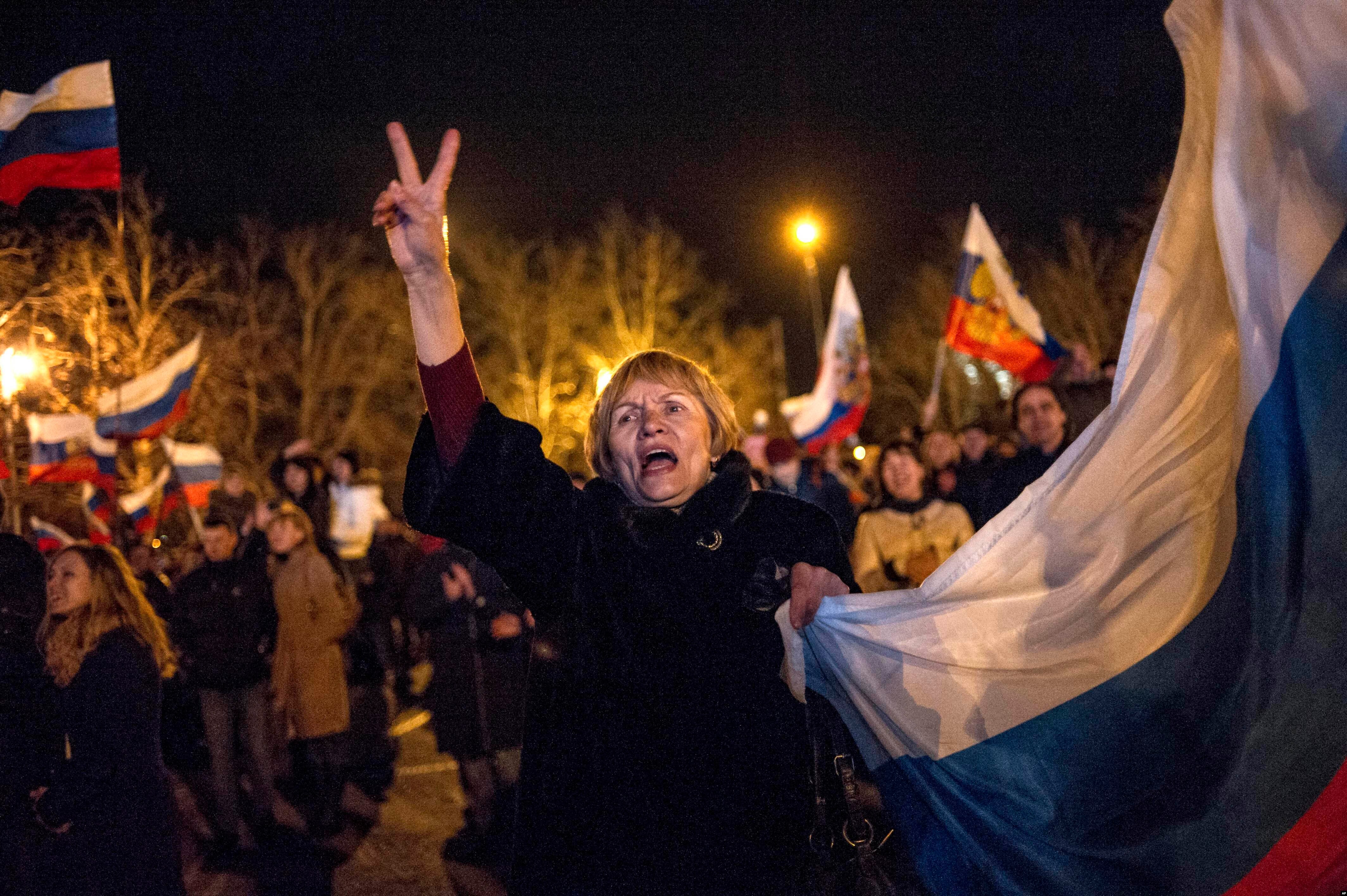
  • Pro-Russian people celebrate in the central square in Sevastopol, Ukraine, March 16, 2014.

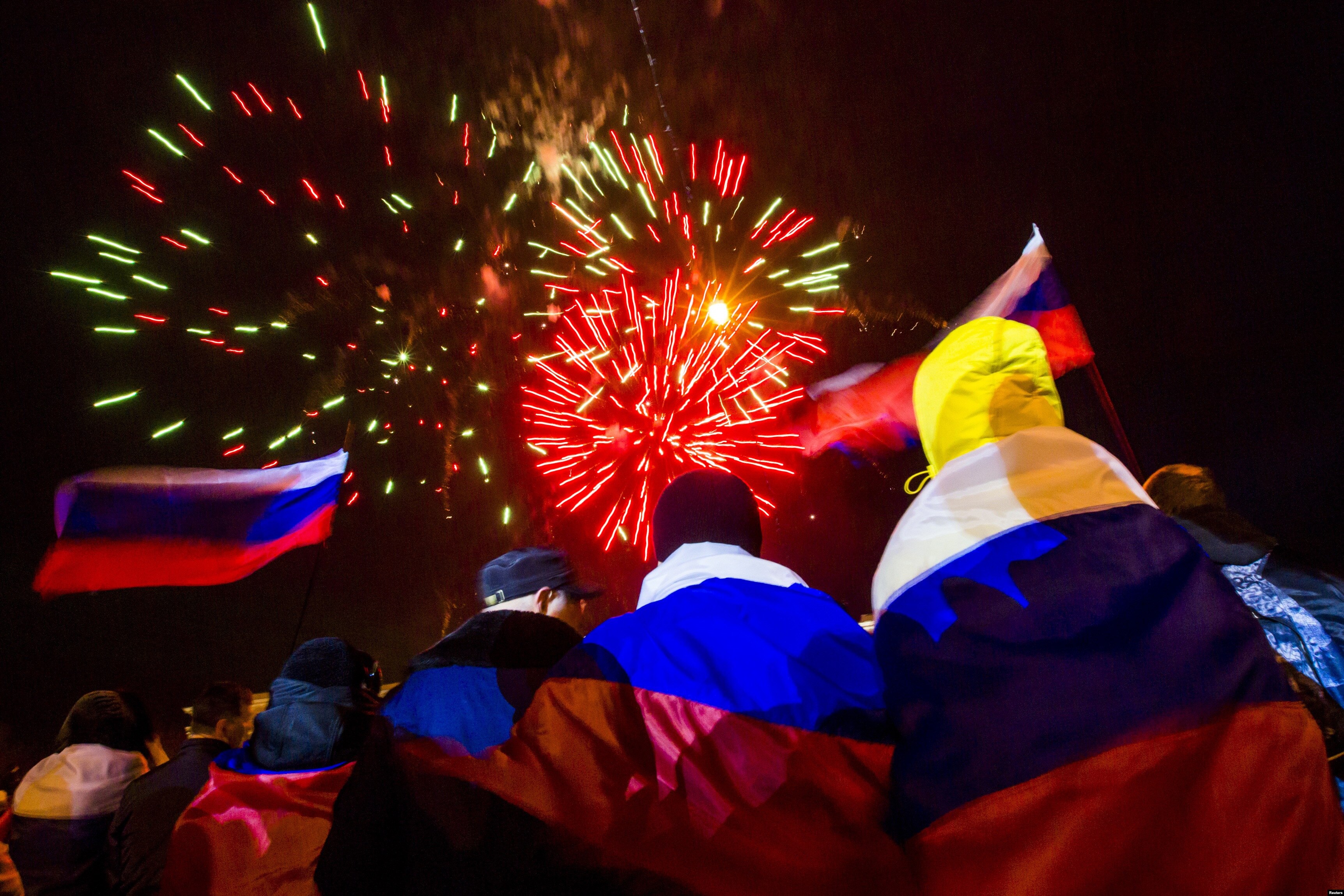
  • People wrapped with Russian flags watch fireworks during celebrations after the preliminary referendum results were announced in Lenin Square in the Crimean capital Simferopol, March 16, 2014.

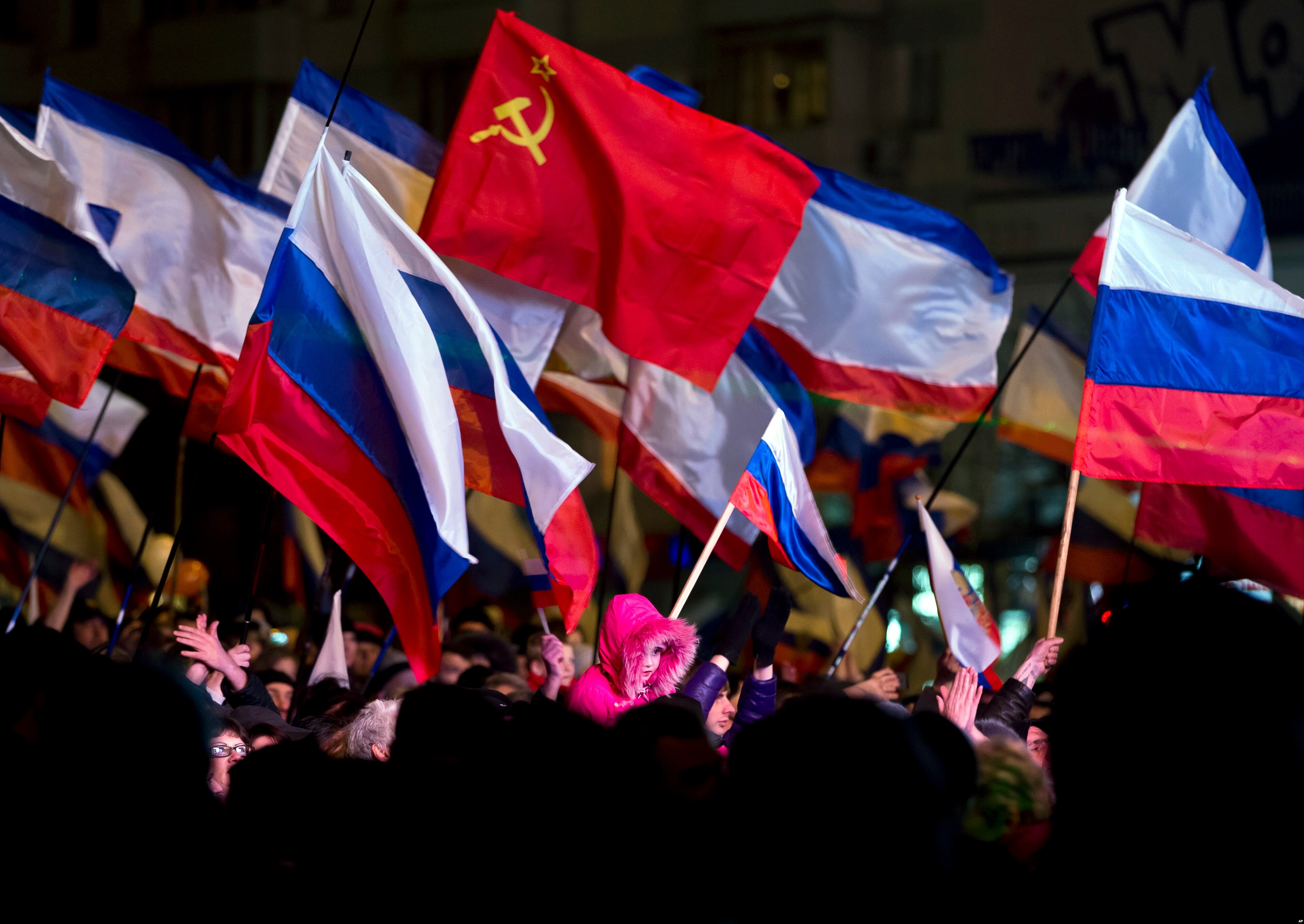
  • Pro-Russian people celebrate in Lenin Square, in Simferopol, Ukraine, March 16, 2014.

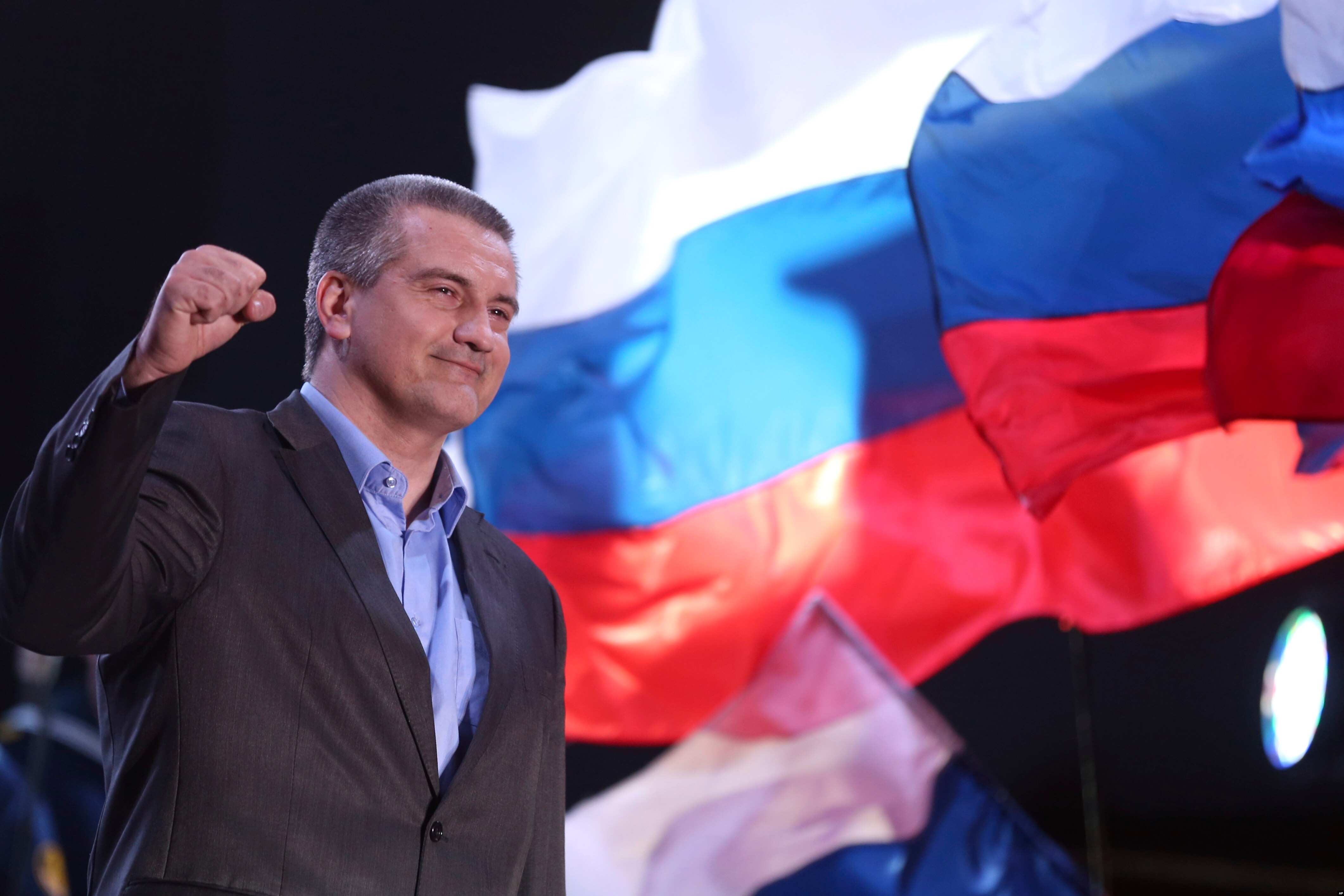
  • Crimea's Russia-backed leader, Sergei Aksyonov, gestures as people celebrate in Lenin Square, in downtown Simferopol, Ukraine, March 16, 2014.

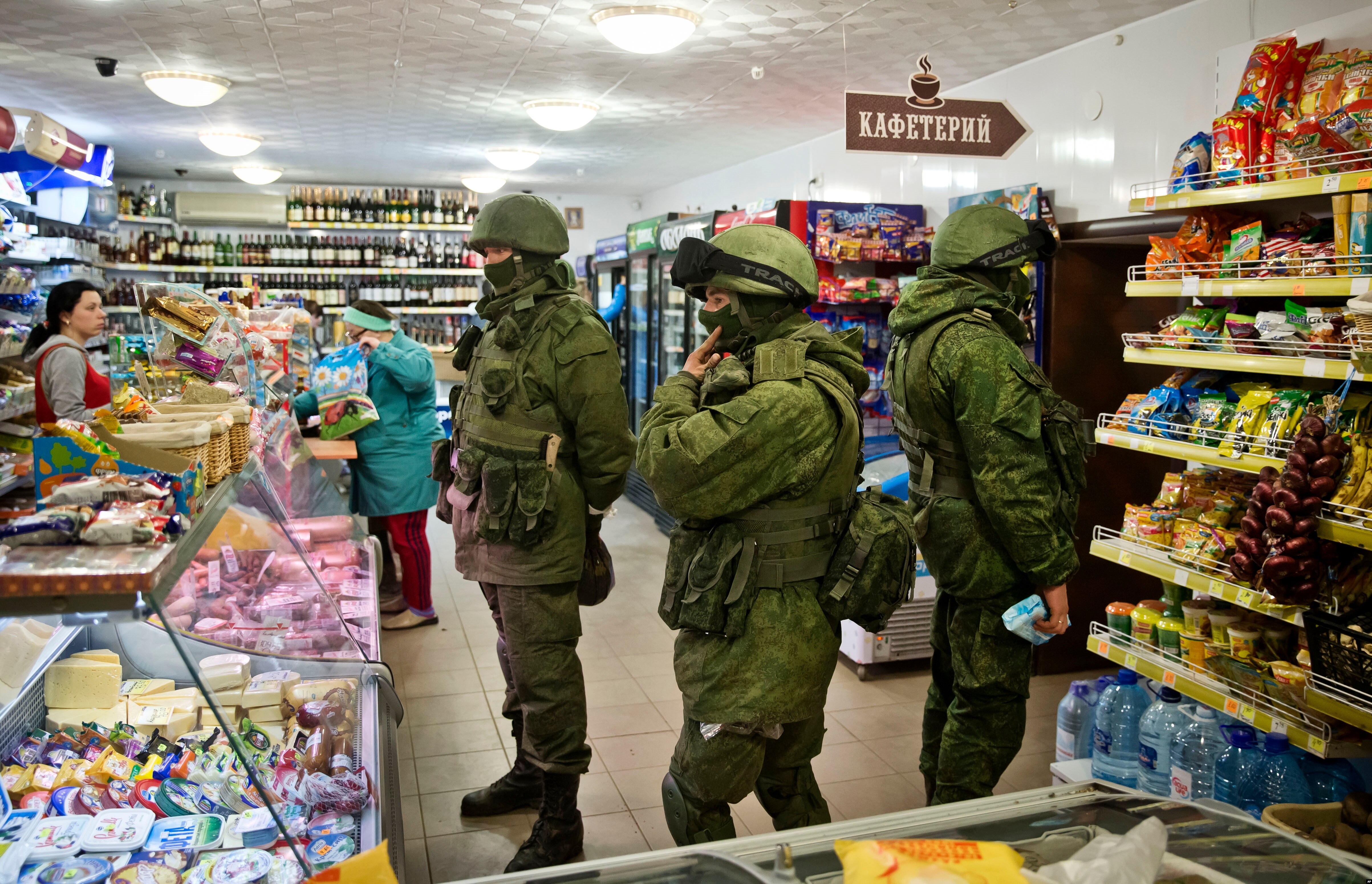
  • Masked gunmen browse in a shop in Perevalne, Ukraine, March 16, 2014.

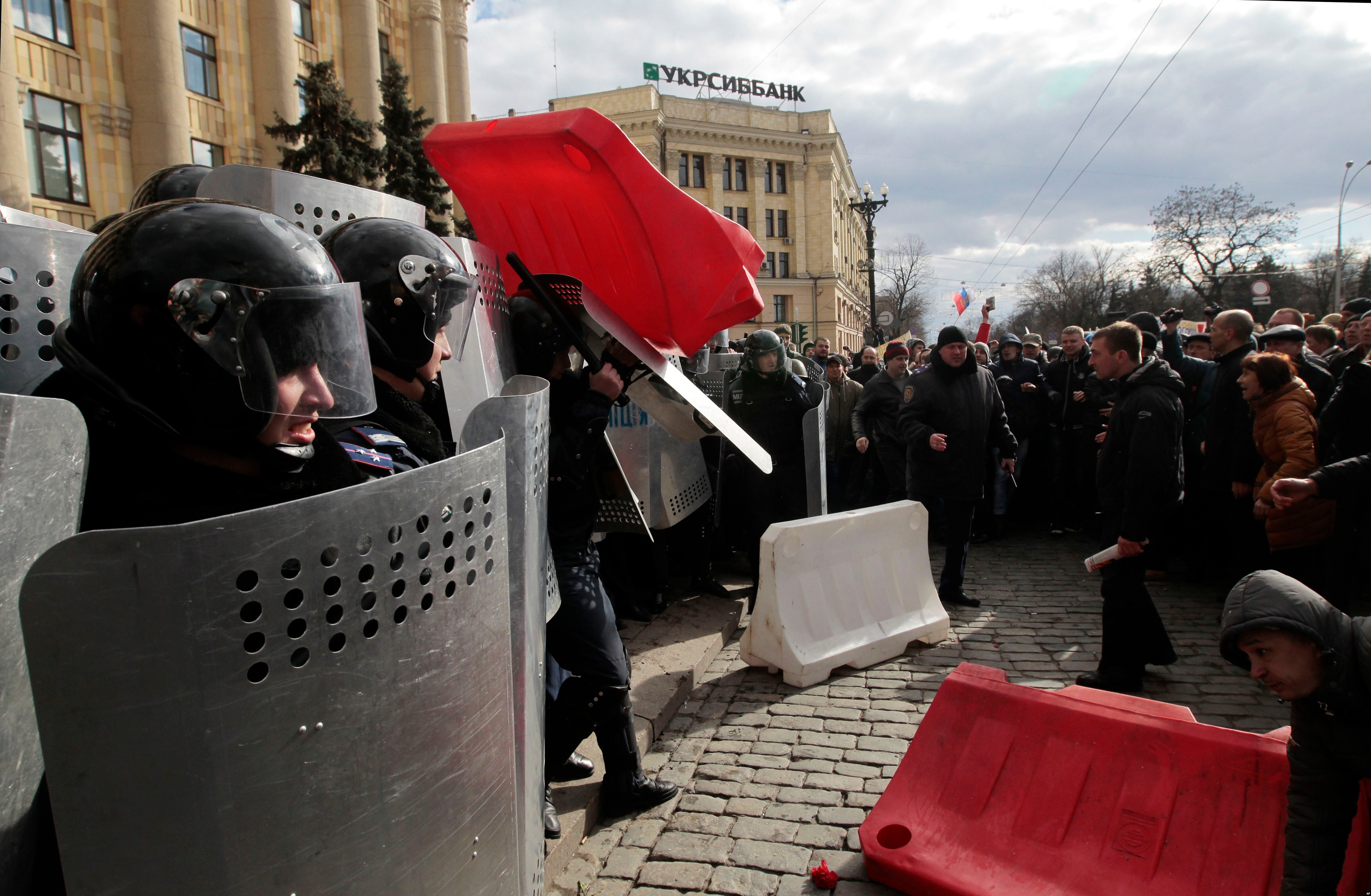
  • A Ukrainian riot police officer tries to shield himself from a road block thrown by pro-Russia supporters near the regional administrative building during a rally in Kharkiv, Ukraine, March 16, 2014.

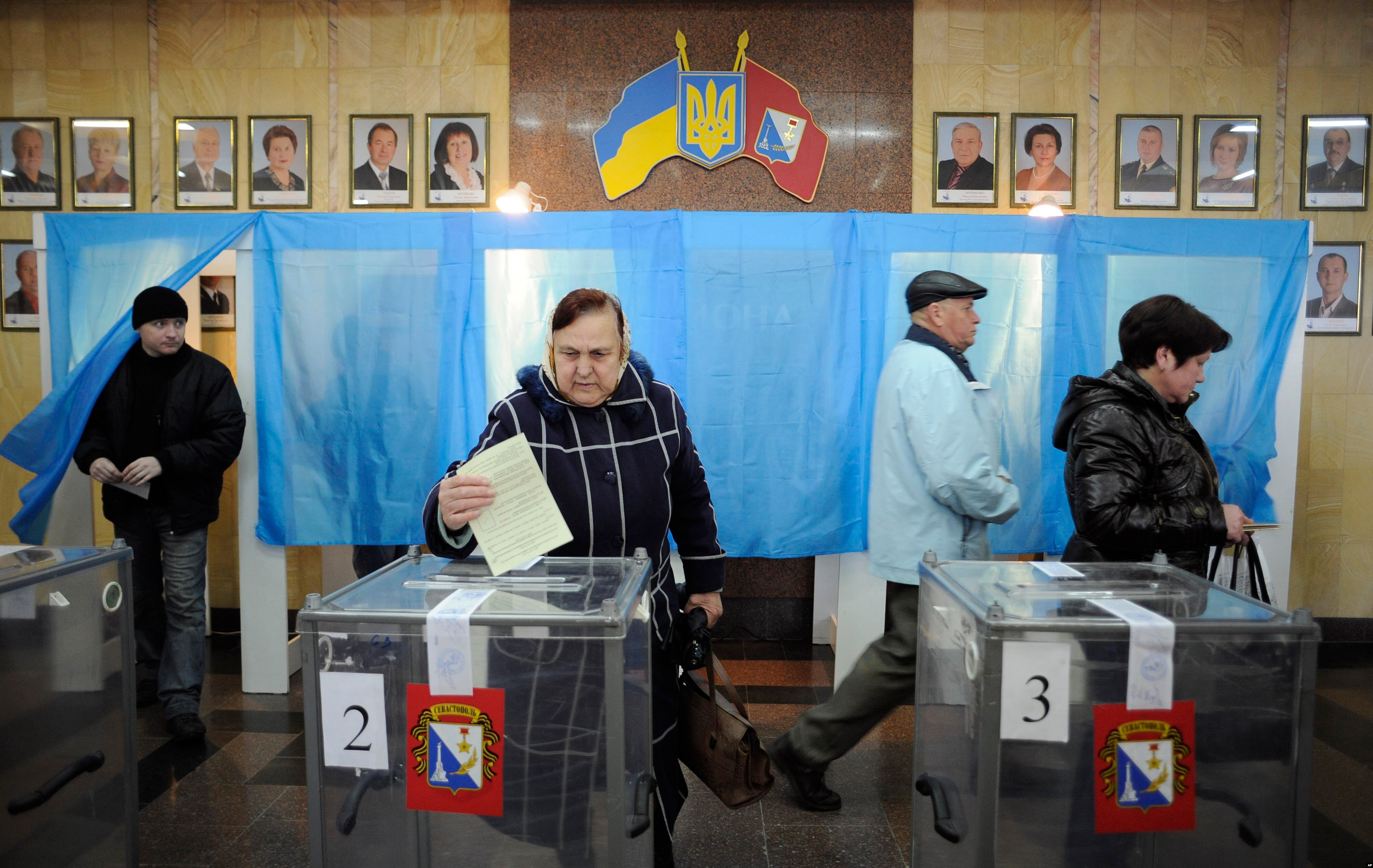
  • A woman casts her ballot at a polling station during the Crimean referendum, in Sevastopol, Ukraine, March 16, 2014.

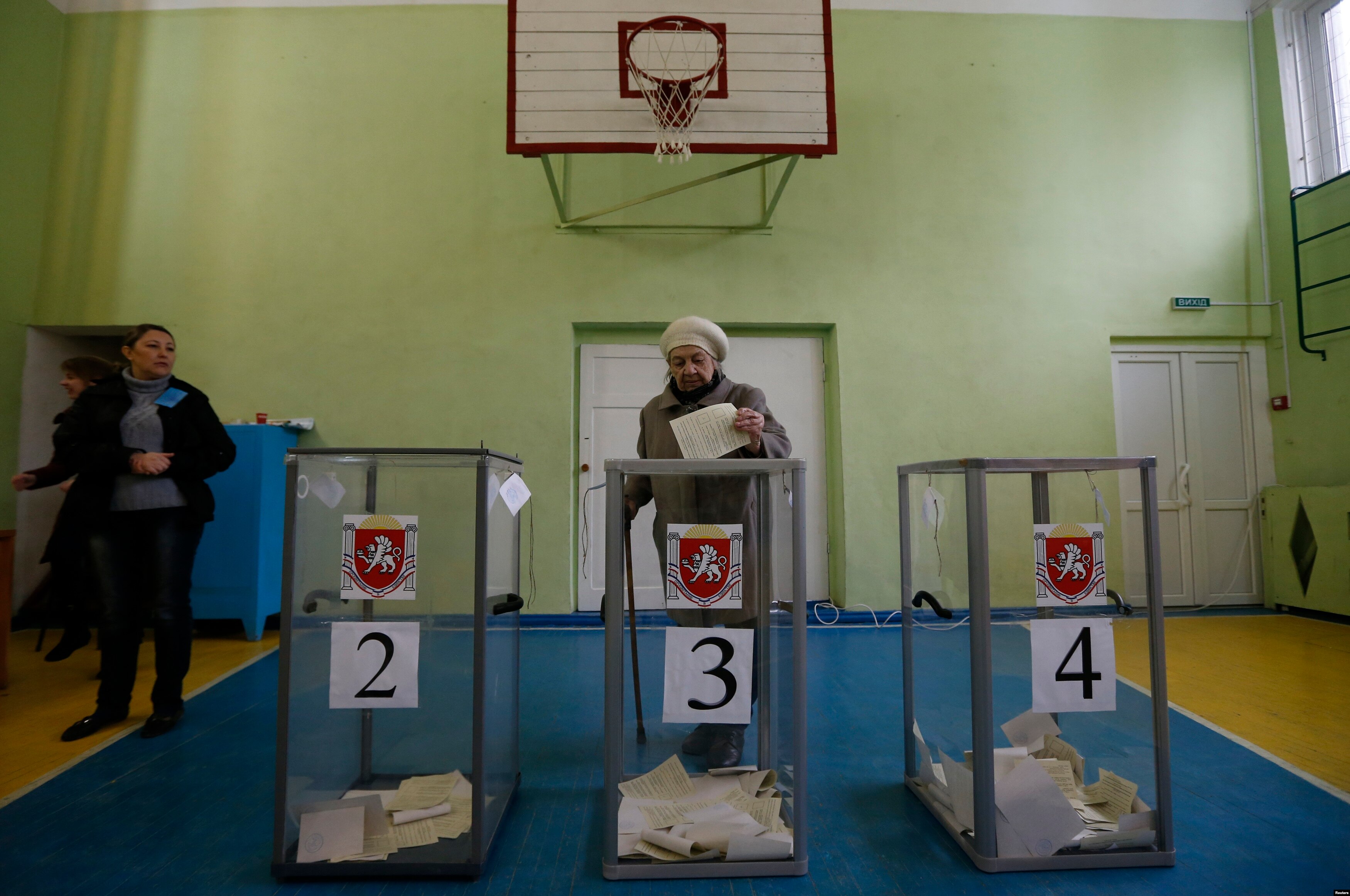
  • A woman casts her ballot during voting in a referendum at a polling station in Simferopol, Crimea, Ukraine, March 16, 2014.

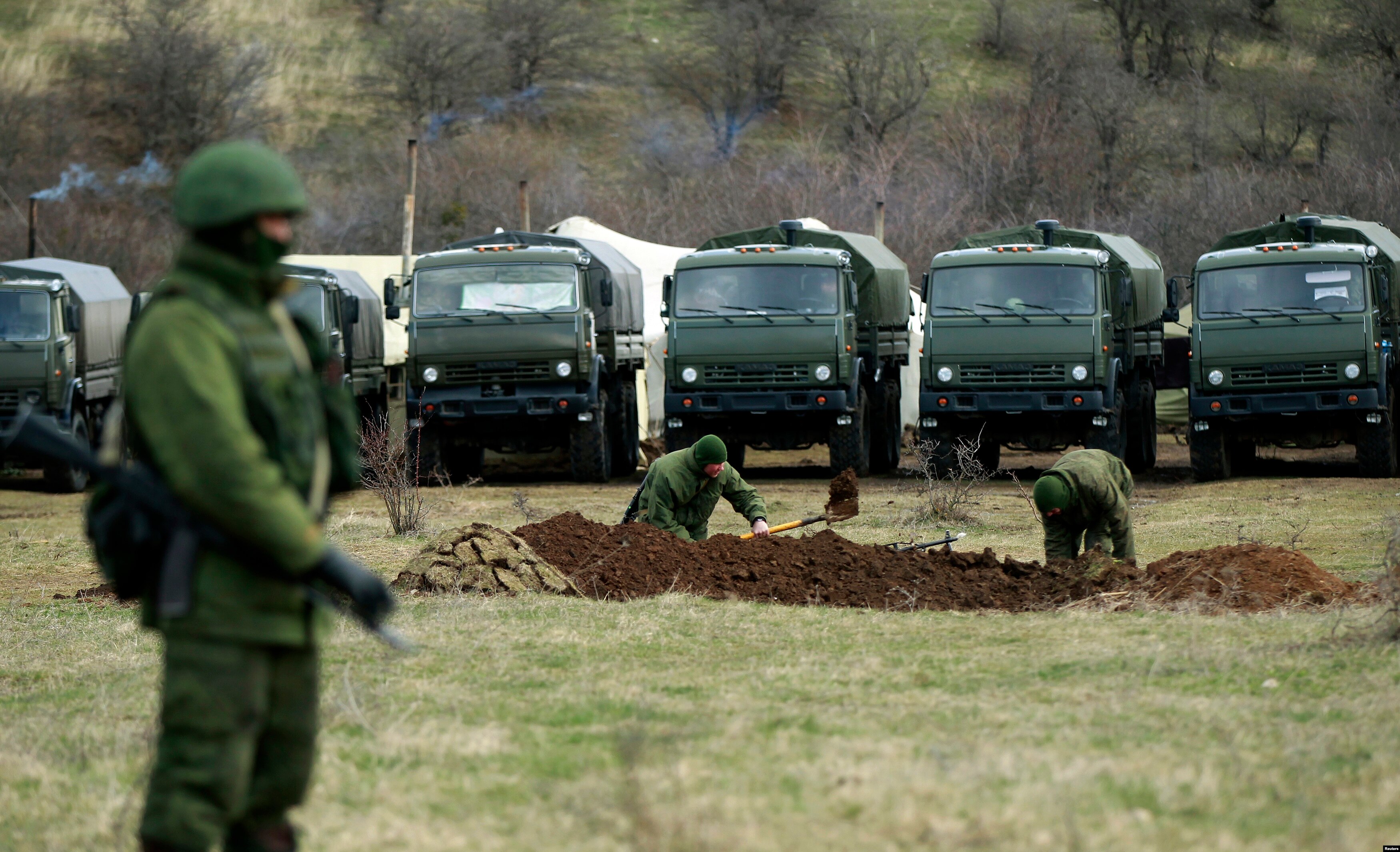
  • Armed men, believed to be Russians, dig trenches near the Ukrainian military base in Perevalnoye outside Simferopol, March 17, 2014.

Earthquake: 4.4 quake strikes Los Angeles; 6 aftershocks so far - Los Angeles Times

Posted: 17 Mar 2014 09:13 AM PDT

A shallow, magnitude 4.4 earthquake was reported Monday morning five miles from Westwood, according to the U.S. Geological Survey. The temblor occurred at 6:25 a.m. PDT at a depth of five miles.

There were no reports of injuries or damage. The quake was felt over a large swath of Southern California but especially in the Westside and the San Fernando Valley.

Here are the latest updates:

There have been six smaller aftershocks so far and more are expected.

Robert Graves, a seismologist with the U.S. Geological Survey, told reporters that Monday's earthquake was the most significant shake in this Southern California area since the magnitude 5.5 earthquake in Chino Hills in 2008.

FULL COVERAGE: Southern California earthquakes

Graves said there have been a couple of aftershocks already since the magnitude 4.4 earthquake struck six miles from Westwood at 6:25 a.m. Monday. Graves said there is always the small possibility that the 4.4 earthquake was only a prelude to an equal or stronger shake.

"Always the possibility that it's a foreshock," Graves said, adding that about 5% of earthquakes are followed by an equal or larger shake and that if it does happen, it would occur within the next several hours.

The region where the fault hit has not been seismically active recently, said Graves.

"The location is somewhat surprising. It's within the Santa Monica Mountains. We have not seen seismicity in it in recent times," said Caltech seismologist Egill Hauksson. "It has been dormant for quite some time."

L.A. Mayor Eric Garcetti confirmed the city has no reports of damage.

"Today's earthquake is a reminder that every L.A. family must be prepared with food, water and other essentials, as well as a plan," the mayor said in a statement. "While it appears the greatest impact of this temblor was a rude awakening, we are executing our post-earthquake protocols to survey our neighborhoods and critical infrastructure. I have been briefed by my science advisor for seismic safety, Dr. Lucy Jones, and will continue to monitor the situation."

Nancy King, geophysicist with the U.S. Geological Survey, said: "We live in earthquake country and we can expect earthquakes frequently and the big one, one day. We don't know when that one's coming."

King said she hopes Monday's earthquake can be used as a teachable event for residents to be better prepared for earthquakes.

"We need to get ready and I think the good news about earthquakes is you can get ready," she said, adding that residents can do things such as bolting down heavy furniture and securing bookcases that could help dramatically during a strong event.

Quake felt over large area (6:38 a.m.)

The quake was felt over a large area of Southern California. Metro said there might be some delays due to the temblor.

Downgraded to 4.4 (6:41 a.m.)

The USGS downgraded the quake to a 4.4 magnitude from 4.7. A spokesman for the Los Angeles Fire Department said there were no immediate reports of any damage or injuries. A spokeswoman from the Los Angeles Police Department also had no reports of damage.

Quake strongest on Westside, Valley  (6:46 a.m.)

Kredit: www.nst.com.my

Ahad, 16 Mac 2014

NST Online Top Stories - Google News

0 ulasan
Klik GAMBAR Dibawah Untuk Lebih Info
Sumber Asal Berita :-

NST Online Top Stories - Google News


Ocean Off Perth Called Diverted Malaysian Plane's Most Likely Last Position - Bloomberg

Posted: 16 Mar 2014 09:11 AM PDT

The weeklong search for a missing passenger jet shifted toward the Indian Ocean as Malaysia's prime minister agreed with investigators that the aircraft was intentionally diverted.

Satellite transmissions that weren't turned off along with other systems showed Malaysian Airline Flight 370 operated for almost seven hours after last making contact with air traffic controllers on March 8, Malaysian Prime Minister Najib Razak said yesterday. That may have taken the Boeing Co. 777-200 near the limits of its fuel load if it was airborne the whole period.

The movements of the plane, which veered off its Kuala Lumpur-to-Beijing course and flew back across the Malaysian peninsula before disappearing, were "consistent with deliberate action by someone on the plane," Najib said.

"In view of this latest development, the Malaysian authorities have refocused their investigation into the crew and passengers on board," he said.

Police searched the home of Zaharie Ahmad Shah, 53, the captain of the flight, shortly after Najib spoke, Reuters reported.

Satellite transmission data analyzed by U.S. investigators showed that the Malaysian Airline (MAS) System Bhd. jetliner's most likely last-known position was in a zone about 1,000 miles (1,609 kilometers) west of Perth, Australia, said two people in the U.S. government who are familiar with the readings. Najib was told that is the most promising lead on locating the plane, one of the people said.

No Requests

"We've had no additional requests from the Malaysian authorities," Rebecca Horton, a spokeswoman for Australian Defence Minister David Johnston, said today by phone.

Related:

Asked whether Australia had picked up any signals consistent with the aircraft on its Jindalee Operational Radar Network, which covers large swathes of the southern Indian Ocean, Leonie Kolmar, a spokeswoman for the Australian Defence Department, said the department "won't be providing comment" on the military surveillance system.

It's hard to see how a passenger aircraft could get through the radar undetected, said Clive Williams, a former military intelligence officer and visiting professor at Australian National University.

"You would think anything like a 777 would get picked up for sure," he said. "Like with any system, you get aberrations. It's not 100 percent accurate."

Search Suspended

India suspended its search operations further to the north and is waiting to receive new coordinates from Malaysia, Indian Navy spokesman Harmit Singh said.

Expanding the search into the Indian Ocean, the third-largest body of water in the world after the Pacific and Atlantic, greatly increases the complexity of the search while potentially diminishing the chances of finding the plane.

The southern Indian Ocean includes some of the world's most forbidding underwater areas, said Dave Gallo, director of special projects for the Woods Hole Oceanographic Institution in Massachusetts, in an interview. Gallo helped lead the search for Air France Flight 447, which crashed into the Atlantic Ocean in 2009 in 2 1/2 miles of water and wasn't found for almost two years.

More Complicated

"The further south you come from Malaysia, the more complicated, deeper and rugged the terrain gets," Gallo said. "We could be talking about 3 miles, 4 miles, easily, of depth. Possibly deeper than Air France 447."

A possible if less likely track goes toward Kazakhstan from northern Thailand, which would force the airliner to fly through Chinese and possibly Indian air space.

Investigators largely discount the northern track theory because the nations along that route have robust air-defense radar systems, and no evidence has turned up that the rogue plane flew into that airspace, according to a person familiar with the probe who spoke on condition of not being named because of the sensitivity of the information.

Kazakhstan hasn't been approached for help in the mission, Foreign Affairs Ministry spokesman Zhanbolat Usenov said.

"I can't believe a plane could fly into Indian airspace undetected," said Paul Hayes, director of aviation security in London at Ascend Worldwide, which collects and analyzes aviation data.

'New Phase'

The jet was carrying 239 passengers and crew when it went missing, with the last satellite contact at 8:11 a.m., according to the Malaysian prime minister. Malaysian officials previously said the plane was last tracked by its transponder, a device that helps radar find its location more precisely, at 1:30 a.m.

"Clearly, the search for MH370 has entered a new phase," the prime minister said at a briefing in Kuala Lumpur. While investigators were unable to plot the "precise location" of the plane, Najib said Malaysia was calling off the search in the South China Sea along the plane's intended flight path.

Najib was briefed on the new data by investigators from two U.S. agencies, the Federal Aviation Administration and National Transportation Safety Board. It showed with a "great degree of certainty" that its system known as Acars, which sends data and text messages to and from the ground, was turned off just before the plane passed Malaysia's east coast, he said.

Transponder Disabled

A short time later, when the jet reached the area where air traffic control passes from Malaysia to Vietnam, its transponder was also disabled, he said. Without a transponder, radar can't identify a plane and has difficulty locating it precisely.

The pilot also commanded the plane's flight-management system to make a turn to the west. That turn was reported to the airline by some of the final data sent by the Acars system, the person familiar with the investigation said.

Disabling Acars transmissions is a multi-step process that can require even an experienced aviator to consult flight manuals, said Kenneth Musser, a retired Delta Air Lines Inc. 777 pilot who later flew and helped train crews at Asiana Airlines Inc.

That move, combined with the disabling of Flight 370's transponder, indicates intervention by "someone who knows the system on the airplane," said Bill Waldock, professor of safety science who teaches accident investigations at Embry-Riddle Aeronautical University in Prescott, Arizona.

Person Familiar

"That has to be the crew or someone who's intimately familiar with how a 777 operates," Waldock said.

Military radars, which don't rely as much on transponders, tracked the plane as it turned back across the Malaysian peninsula before changing direction again and heading northwest, the prime minister said.

Investigators narrowed the jetliner's possible routes by mapping once-an-hour contacts with a satellite that continued after Acars and other systems were shut down, according to three people familiar with the work.

The pings provide no data about the plane's speed, location or altitude. Still, they allow calculations of an arc along the earth's surface where the plane was each time it communicated with the satellite.

The two routes said to be possibilities are along one arc.

Australia's radar network includes a long-range system capable of detecting air targets as small as the BAE Systems Hawk, a single-engine, two-seater jet. A base station in Laverton, Western Australia state has a range of about 3,000 kilometers (1,864 miles) covering most of the ocean south of Java and west from Perth, according to the Defense Ministry's website.

Pilot's Passion

Beyond an expanding search area, the investigation has also honed in on the role of the two men in the cockpit, Zaharie and Fariq Abdul Hamid, the first officer. Fariq, 27, joined the airline in 2007, while Zaharie had worked at the carrier since 1981 and logged 18,365 flying hours.

Zaharie displayed a deep passion for the Boeing jetliner that included construction of his own flight simulator using a computer program, according to an online post on a community of simulator enthusiasts.

Najib defended Malaysia's handling of the search after a week of false leads and at times contradictory communication from authorities that has prompted criticism from China, where most of the passengers are from.

"We understand the desperate need for information on behalf of the families and those watching around the world," he said. "But we have a responsibility to the investigation and the families to only release information that has been corroborated. And our primary motivation has always been to find the plane."

The airline said in a release that publication of some information was delayed in the past week because the carrier had to share all available data points with authorities.

Extreme Sensitivity

"Given the nature of the situation and its extreme sensitivity, it was critical that the raw satellite signals were verified and analyzed by the relevant authorities so that their significance could be properly understood," the company said. "This naturally took some time, during which we were unable to publicly confirm their existence."

Initially the search focused along the plane's intended route in the South China Sea, until the military radar data indicated that Flight 370 turned around and flew over Malaysia and into the Malacca Strait. Malaysia extended the search west as far as the Andaman Sea, the prime minister said.

"We have conducted search operations over land, in the South China Sea, the Straits of Malacca, the Andaman Sea and the Indian Ocean," Najib said. "At every stage, we acted on the basis of verified information, and we followed every credible lead. Sometimes these leads have led nowhere."

To contact the reporters on this story: Andrew Davis in Hong Kong at abdavis@bloomberg.net; Manirajan Ramasamy in Kuala Lumpur at rmanirajan@bloomberg.net; Ranjeetha Pakiam in Kuala Lumpur at rpakiam@bloomberg.net

To contact the editors responsible for this story: Bernard Kohn at bkohn2@bloomberg.net; Rosalind Mathieson at rmathieson3@bloomberg.net Garry Smith

Beneath Russian flags, Crimeans vote on a return to their 'homeland' - Christian Science Monitor

Posted: 16 Mar 2014 09:10 AM PDT

Voters in Crimea turned out Sunday for a controversial referendum that offers a path to Russian annexation. Ethnic Tartars who oppose Crimean secession stayed away from the polls.  

By Sabra AyresCorrespondent / March 16, 2014

A woman holds a Russian flag as she casts her ballot during Sunday's referendum on the status of Ukraine's Crimea region at a polling station in Bakhchisaray. Crimeans are deciding whether to break away from Ukraine and join Russia in a referendum that has triggered the worst crisis in East-West relations since the Cold War.

Sergei Karpukhin/Reuters

Enlarge

In a vote freighted with geopolitical implications, Crimeans went to the polls Sunday in a snap referendum on whether to break away from Ukraine and join Russia, the former ruler of this Black Sea peninsula.

Skip to next paragraph

' + google_ads[0].line2 + '
' + google_ads[0].line3 + '

'; } else if (google_ads.length > 1) { ad_unit += ''; } } document.getElementById("ad_unit").innerHTML += ad_unit; google_adnum += google_ads.length; return; } var google_adnum = 0; google_ad_client = "pub-6743622525202572"; google_ad_output = 'js'; google_max_num_ads = '1'; google_feedback = "on"; google_ad_type = "text"; // google_adtest = "on"; google_image_size = '230x105'; google_skip = '0'; // -->

While Crimean Tatars and ethnic Ukrainians boycotted the hastily organized vote, pro-Russian voters compared it to a homecoming guaranteeing a brighter future.

"I was born in Crimea in 1950, when it was Russia, and now I'm voting to go back to my homeland," said Aleksander Kromel after casting a ballot at a polling station in  Simferopol, the regional capital. "I'm voting for the power of the Russian state to finally bring us out of this mess that the Ukrainians have made of us. We've been on our knees for 20 years living under the Ukrainians."

Russia's red, blue and white flag adorned windows and balconies of apartment houses across the regional capital, including a large one draped in front of the regional parliament. Russian Cossacks guarded the building's entrances, part of a huge Russian security presence here that critics say is a form of intimidation.

Sunday's referendum asks whether Crimea should be annexed by Russia or revert to a 1992 Ukrainian constitution under which Crimea can set its own foreign policy. Kiev considers the referendum illegitimate; the US and the European Union have said they will not recognize the results.  

Just four hours after polls opened, the pro-Russian regional prime minister, Sergei Aksyonov, announced that voter turnout was already 50 percent. Official results of the referendum will be announced Monday. But the outcome of the referendum seems to be a foregone conclusion given the ethnic-Russian majority among the peninsula's 2 million population. For them, joining Moscow means escaping the yoke of a Western Ukrainian government now in power in Kiev.

"We've always wanted to rejoin Russia," said Aleksander Leonov, a polling station supervisor. "But this wave of support for the referendum rose up when the bandits took power in Kiev."

Last month's ousting of former President Viktor Yanukovych amid mass protests has brought to power an interim cabinet made up of former opposition members. In Crimea, as in other parts of Ukraine's Russian-oriented east and south, the new leaders in Kiev are accused of trying to impose an unfriendly, Western Ukrainian agenda.

"We're just too different from the Western Ukrainians. We can't live as one nation with them any more," Mr. Kromel, a retiree, said. "We're are simple, open-hearted Slavic people who believe in the Orthodox church. The Western Ukrainians are Catholic and more materialistic."

Tartar boycott

The referendum does not allow voters to keep Crimea's current status as an autonomous region of Ukraine. Crimean Tatars boycotted the vote, saying it was illegal. The Tatars are a Turkic ethnic group who are Muslims, and represent about 12 percent of the peninsula's population. In 1944, Soviet rulers expelled around 200,000 Tartars to central Asia; the survivors and their descendants were only allowed to return in the 1980s. 

At the polling station in the Cultural Center of Simferopol's Kamenka district, a majority Tatar neighborhood, less than 10 percent of the almost 1,800 registered voters had shown up by 1 p.m., according to a supervisor.

Across the street from the dilapidated, Soviet-era building, several Tatar men stood by and watched as a few voters trickled in.

"This referendum is a bad joke," said Ayder Abibialayev, who abstained from voting. "You can't hold a referendum in 15 days. This was organized by the Kremlin, and they're having us vote with a gun to our head."

Ukraine's Interior Ministry estimates that there are about 20,000 Russian soldiers occupying Crimea. Russian President Vladimir Putin claims they are local self-defense teams there to protect Ukraine's threatened Russian-speakers.

"Ukraine is now teaching Russia a lesson about how to get rid of dictators," said Timor Teifukov, a Tatar who boycotted the referendum. "Putin is afraid of what Ukraine is now showing Russia, that's why he's manufactured this referendum."

Kredit: www.nst.com.my

Sabtu, 15 Mac 2014

NST Online Top Stories - Google News

0 ulasan
Klik GAMBAR Dibawah Untuk Lebih Info
Sumber Asal Berita :-

NST Online Top Stories - Google News


Where is Malaysia Airlines Flight 370? A rundown on various theories on Boeing ... - Vancouver Sun

Posted: 15 Mar 2014 03:37 AM PDT

Crimea to vote in Russia referendum, Moscow vetoes UN move - Reuters

Posted: 15 Mar 2014 08:57 AM PDT

Ukrainian servicemen stand guard at a check point near the village of Salkovo in Kherson region, March 15, 2014. REUTERS/Valentyn Ogirenko

(Reuters) - Pro-Russian leaders in Crimea made final preparations on Saturday for a referendum widely expected to transfer control of the Black Sea region from Ukraine to Moscow, despite an outcry and threat of sanctions from the West.

Russia vetoed a United Nations Security Council resolution that declared the referendum invalid, as Ukraine's defense ministry said it scrambled aircraft and paratroops to confront a Russian encroachment beyond Crimea's regional boundary.

Ukraine's new rulers accused "Kremlin agents" of fomenting deadly violence in the Russian-speaking east and urged people not to respond to provocations Kiev fears Moscow may use to justify further incursions its takeover of Crimea. Russia issued a new statement saying it was ready to protect Ukrainians from nationalist militants it said were threatening eastern cities.

Sunday's vote in Crimea, dismissed by Kiev and Western governments as illegal, has triggered the worst East-West crisis since the Cold War and marks a new peak in turmoil in Ukraine that goes back to November when now ousted President Viktor Yanukovich walked out on a trade deal with the European Union.

Though the situation was calm on the Black Sea peninsula itself on Saturday ahead of the vote, tensions remained high in eastern Ukraine where two people were killed in Kharkiv late on Friday.

Crimean Prime Minister Sergei Aksyonov, whose election in a closed session of the regional parliament is not recognized by Kiev, said there were enough security personnel to ensure the poll would be safe.

"I think we have enough people - more than 10,000 in the self-defense forces, more than 5,000 in different units of the Interior Ministry and the security services of the Crimean Republic," he told reporters.

In Kiev, the Ukrainian parliament voted to dissolve the Crimean regional assembly which has organized the referendum and backs union with Russia.

And on Kiev's Independence Square or Maidan - lodestar of the revolt against the Moscow-backed Yanukovich - hundreds of people chanted "Crimea is Ukraine! Crimeans, we support you!"

One Ukrainian nationalist leader in the Kiev legislature said the Crimean assembly must be sanctioned to discourage separatist movements in the mainly Russian-speaking east.

Aksyonov and Moscow do not officially recognize that Russian troops have taken control of Crimea, and say that thousands of unidentified armed men visible across the region belong to "self-defense" groups created to ensure stability.

But the Russian military has done little to hide the arrival of thousands of soldiers, along with trucks, armored vehicles and artillery. Masked gunmen surrounding Ukrainian military bases in Crimea have identified themselves as Russian troops.

"REAL DANGER" OF INVASION

Moscow leases the Crimean port of Sevastopol from Kiev to station its Black Sea Fleet. Under the deal it can station up to 25,000 troops there but there movements are restricted onshore.

Polling stations will open at 8 a.m. (0600 GMT) on Sunday and close 12 hours later. Preliminary results are expected within hours of polls closing on Sunday night.

Crimea's electorate of 1.5 million, according to a format of the ballot paper issued last week, will choose between one of two options - but both imply Russian control of the peninsula.

Many of the ethnic Russians who have a majority on the peninsula seem likely to back the first option on the ballot, union with Russia, if only for economic reasons. A second option is independence, initially within Ukraine, that Crimea's new leaders say they will use as a basis for accepting Russian rule.

Ethnic Tatars, Sunni Muslims of Turkic origin who make up 12 percent of Crimea's population, have said they will boycott the referendum, despite promises by the authorities to give them financial aid and proper land rights.

Acting Ukrainian president Oleksander Turchinov referred to three deaths in two days in two eastern cities - Donetsk and Kharkiv - and said there was "a real danger" of invasion by Russian troops across Ukraine's eastern border.

Populations of both cities have large numbers of Russian- speakers, significant since Russian President Vladimir Putin has vowed to protect ethnic Russians and Russian-speakers in Ukraine. His foreign ministry said on Saturday it would consider requests from people in Ukraine for protection - similar language to that used to justify Moscow's move in Crimea.

Addressing members of Yanukovich's party, Turchinov said: "You know as well as we do who is organizing mass protests in eastern Ukraine - it is Kremlin agents who are organizing and funding them, who are causing people to be murdered."

Two men, described by police as pro-Russian demonstrators, were shot dead in a fight in Kharkiv late on Friday. A Ukrainian nationalist was stabbed to death when pro-Russia and pro-Ukraine demonstrators clashed in Donetsk on Thursday.

Turchinov, quoted by local media, closed the parliamentary session by saying: "The situation is very dangerous. I'm not exaggerating. There is a real danger from threats of invasion of Ukrainian territory and we will reconvene on Monday at 10."

DEFENDING "COMPATRIOTS"

Russia has refused to recognize the new Western-backed interim administration in Kiev. Its foreign ministry unnerved the new authorities in Kiev by saying clashes in Donetsk showed Ukrainians had lost control of the situation there.

Ukraine's interior minister accused ousted president Viktor Yanukovich of promoting unrest with "extremist Russian forces". Arsen Avakov issued an appeal on Facebook: "Don't let them manipulate you! Stop this hysteria ... This isn't a game of toy soldiers - this is a real conflict and people's real lives."

Two men, aged 21 and 30, were killed in Kharkiv by buckshot late on Friday when pro-Russian demonstrators besieged an office of the far-right Ukrainian nationalist group Right Sector, which rose to prominence fighting riot police in Kiev over the winter.

Police said 32 Right Sector activists and six pro-Russian demonstrators were detained and a number of weapons seized.

Kharkiv governor Ihor Baluta, newly appointed by the interim authorities in Kiev, said the "well-planned provocation by pro-Russian activists" began when unidentified men in a minibus provoked a confrontation with pro-Russia demonstrators and then drove off. When pursuing demonstrators caught up with the vehicle, it was parked outside the nationalists' building.

The Right Sector spokesman, quoted by Interfax-Ukraine news agency, said his group had taken no part in the initial clash and believed the minibus was left outside its office by others.

The Russian Foreign Ministry said it had information that armed Right Sector militants were opening an "eastern front" and planning to reinforce their activists in eastern cities.

Western powers, preparing economic sanctions against Russia over Crimea, largely dismiss Russia's characterization of the new authorities in Kiev as the successors of Nazi-allied Ukrainian forces which fought the Red Army in World War Two.

Authorities in Kharkiv banned political gatherings that were planned in the city over the weekend. In Donetsk, hundreds of people rallied in Lenin Square, flying Russian flags and calling for a referendum in the region similar to that in Crimea.

In Moscow, a large crowd estimated by witnesses at some 30,000 demonstrated against Russia's action in Ukraine, the biggest protest against Putin in two years. At a smaller rally, people chanted "Crimea is Russia!" and "No to fascism!"

(Additional reporting by Aleksander Vasovic and Andrew Osborn in Simferopol, Lina Kushch in Donetsk and Ron Popeski, Pavel Polityuk and Alastair Macdonald in Kiev; Writing by Richard Balmforth; Editing by Alastair Macdonald)

Kredit: www.nst.com.my

Jumaat, 14 Mac 2014

NST Online Top Stories - Google News

0 ulasan
Klik GAMBAR Dibawah Untuk Lebih Info
Sumber Asal Berita :-

NST Online Top Stories - Google News


Lavrov: With no 'common vision' with US, Russia will honor Crimea vote - CNN

Posted: 14 Mar 2014 09:47 AM PDT

STORY HIGHLIGHTS
  • NEW: "We don't have a common vision of the situation," Lavrov says, but talks partly useful
  • NEW: Ukraine says parts of its infrastructure in Crimea are taken over by Russian buildup
  • Russian state media says Russian fighter jets have been moved to a Belarus airfield
  • The U.S. warns there will be "costs" for Russia if a Crimea referendum goes ahead Sunday

London (CNN) -- Russia will respect the result of Sunday's referendum in Crimea, Russian Foreign Minister Sergey Lavrov told reporters Friday after his meeting with U.S. Secretary of State John Kerry.

Lavrov declared that Russia and the West don't share common ground on how to resolve the crisis in Ukraine's Crimean Peninsula.

"Also as to the practical measures which could be taken by foreign partners, we don't have a common vision of the situation," he said.

"There are still differences, but the conversation was definitely useful in order to better understand how we understand each other in the situation and the general context of the wide spectrum of the issues of the Russian-American relations. From this point of view, the negotiations were useful," Lavrov said.

Evgenyi Batyukhov cries Friday, March 14, at the site where pro-Russian and pro-Ukrainian activists clashed the night before in Donetsk, Ukraine. Rising tensions in Ukraine have centered on Crimea, a peninsula in the country's southeast where local officials have declared their allegiance to Russia and armed men have blockaded Ukrainian military sites. But tensions have also spilled over into other parts of the country.Evgenyi Batyukhov cries Friday, March 14, at the site where pro-Russian and pro-Ukrainian activists clashed the night before in Donetsk, Ukraine. Rising tensions in Ukraine have centered on Crimea, a peninsula in the country's southeast where local officials have declared their allegiance to Russia and armed men have blockaded Ukrainian military sites. But tensions have also spilled over into other parts of the country.
Crisis in Ukraine
HIDE CAPTION
<<
<
1
2
3
4
5
6
7
8
9
10
11
12
13
14
15
16
17
18
19
20
>
>>

Asked if Kerry threatened sanctions against Russia at their meeting, Lavrov told reporters that Kerry "did not put forward any threats against Russia."

Still, Lavrov said, Russia is aware that Washington and European governments are considering sanctions against Russia because of the Ukraine crisis.

"I assure you that our partners understand that sanctions are counterproductive ... and (they) will not facilitate mutual interests," he said.

Describing his meeting with Kerry, Lavrov said he expressed concern that necessary measures have not been taken to secure stability in Ukraine, and that measures have not been taken to stop what he called unlawful activities of radicals, including armed violence, in that country.

Lavrov also condemned recent violence in Donetsk, Ukraine. He said that Russia has no plans to get involved there but added that the rights of ethnic Russians have to be respected.

The outcome of their last-ditch talks was eagerly anticipated as a contentious referendum on the future of Ukraine's Crimean region looms.

The two men met four times last week in Europe and have been in daily phone contact since. But they have failed to reach common ground on how to solve the crisis over Crimea.

They met again at the residence of the U.S. ambassador to London as the clock ticked down on efforts to find a diplomatic solution.

Crimea's pro-Russian government has scheduled a referendum Sunday in which residents of the Crimean Peninsula will vote whether to secede from Ukraine and join Russia or to choose effective independence.

U.S., European support

Ukraine's interim government in Kiev, as well as U.S. and European leaders, are warning that the vote is illegitimate.

President Barack Obama said Europe and the United States "stand united" on Ukrainian sovereignty and subsequent consequences if that sovereignty is violated.

"We continue to hope there's a diplomatic solution to be found" in Ukraine, Obama told reporters Friday during a meeting with Ireland's prime minister. He made those comments before the Kerry-Lavrov meeting concluded.

Before the talks with Lavrov, Kerry met with UK Prime Minister David Cameron and Foreign Secretary William Hague at 10 Downing St.

"We want to see Ukrainians and the Russians talking to each other. And if they don't, then there are going to have to be consequences," Cameron said.

Both Europe and the United States have warned Russia of potential sanctions if it continues its actions in Ukraine.

"Hopefully, we all hope that we don't get pushed into a place where we have to do all those things. But we'll see what happens," Kerry said.

Buildup in Crimea

Because of the illegal presence of Russian military forces in Ukraine, infrastructure and military equipment have been damaged, the Ukrainian Foreign Ministry said Friday. And equipment, firearms, munitions and other property of the Ukrainian Defense Ministry and military forces in Crimea have been illegally confiscated.

The ministry reported that 49 out of 56 facilities of the Ukrainian State Border Service have been either blockaded or put out of operation, including all five administrative facilities, 10 of 12 border control units and three checkpoints.

Eight military units of the Armed Forces of Ukraine in Crimea have been taken over, and 22 are being blockaded, the ministry said. Firearms and ammunition have been illegally confiscated from three military units of the Armed Forces of Ukraine, it said.

'Costs' for Russia

A senior State Department official said ahead of Kerry's arrival that "there will be costs" for Russia if the Crimea referendum goes ahead.

"Our analysis is that Russia has encouraged, aided and abetted this referendum process from day one and financed it," the official said.

The United States has urged Russia to de-escalate the situation by talking to the government in Kiev, pulling back Russian forces in Crimea to their barracks and allowing in international observers to ensure the rights of all ethnic groups are maintained.

Russia has said that it has the right to intervene in Ukraine to protect ethnic Russians from "fascists" and nationalists. It denies that its forces are militarily involved in Crimea, despite evidence to the contrary.

Ukraine's interim Prime Minister Arseniy Yatsenyuk blasted what he called Russia's illegal "military aggression" against his nation as he addressed the U.N. Security Council in New York on Thursday

But he also insisted that a peaceful resolution that ends with Kiev and Moscow becoming "real partners" is still possible and that he is "convinced that Russians do not want war."

Russian military drills

Yatsenyuk's remarks come as about 8,500 Russian troops staged snap military exercises not far from his nation's eastern border.

The United States is "very concerned" about the drill and will be asking Lavrov what is meant by it, the senior State Department official said Thursday.

"This is the second time inside of a month that Russia has chosen to mass large amounts of force on short notice without much transparency around the eastern borders of Ukraine," the official said.

Vladislav Seleznev, a spokesman for the Ukrainian Ministry of Defense in Crimea, told CNN that 14 Uragan multiple rocket launch systems were seen being moved into Crimea's interior Friday, along with a convoy of Russian military vehicles.

An earlier report that Russian S-300 missiles had been seen was mistaken, he said. The Defense Ministry has no more information on where the convoy may be now, he said.

A CNN team in Crimea passed six long-range artillery guns in a convoy on the road from Dzhankoy to Chongar. The first vehicle had Russian license plates and the rest no plates.

Meanwhile, six Russian jet fighters were moved to Bobruisk airfield in Belarus on Thursday, Russian state news agency RIA Novosti cited the Belarussian Defense Ministry as saying Friday.

The move is part of Belarus' offer to Russia to participate in joint military drills, the news agency reported. Belarus, a former Soviet republic, borders Russia and northern Ukraine.

Tensions spill into violence

Ukraine has been simmering since November, when protesters angry at the government -- in part for its president's move toward Russia and away from the European Union -- began hitting the streets. In February, after deadly clashes between security forces and demonstrators, President Viktor Yanukovych was ousted.

Rising tensions have centered on Crimea, an ethnic Russian-majority peninsula in the country's southeast where local officials have declared their allegiance to Russia and armed men have blockaded Ukrainian military sites.

Tensions also have spilled over into other parts of eastern Ukraine, such as Donetsk, where the regional health authority said a 22-year-old man was stabbed to death and at least 10 others were injured in clashes Thursday between pro-Ukrainian and pro-Russian protesters.

Russia's Foreign Ministry condemned the Donetsk violence, saying "right-wing radical groups" had attacked a peaceful demonstration against the interim government in Kiev.

"The authorities in Kiev are not controlling the situation in the country," a statement on its website said. "Russia is aware of its responsibility for the lives of its compatriots and citizens in Ukraine and retains the right to defend people."

But Ukraine's Foreign Ministry pointed the finger elsewhere. The violence was "a planned provocation that has direct correlation to the destructive actions of certain Russian Federation citizens and social organizations, coming to Ukraine in order to escalate the tensions," spokesman Evhan Perebiynis said at a Foreign Ministry briefing.

A court in Donetsk was considering a request Friday by the Donetsk City Council to ban protests over the weekend.

Russia slams Western 'interference'

Although the bloodshed has been limited, fears are growing that the crisis could turn into a full-scale military conflict.

Speaking after Yatsenyuk at the United Nations, Russian U.N. Ambassador Vitaly Churkin accused the West of having "fanned the flames of unrest" in Ukraine.

Since Yanukovych's "illegal" ouster, Ukraine's pro-Western government has exacerbated the crisis by clamping down on opposition and effectively "splitting this country (into) two parts," Churkin said.

As to Sunday's referendum, the ambassador said citizens there deserve the same right to self-determination as anyone. "Why should the Crimeans be the exception?" he asked.

As the war of words continued, Russian state media reported Friday that coordinated cyberattacks by hackers had disrupted government websites including those of the Kremlin and Russia's central bank. The websites appeared to be working normally again by Friday afternoon, RIA Novosti said.

Western officials warn Moscow

Western officials, meanwhile, warned Thursday that Russia will face significant consequences unless it changes course in Crimea, with Obama pledging to "stand with Ukraine."

In a speech to the German parliament, German Chancellor Angela Merkel said that Sunday's secession referendum was unconstitutional and that Russia's presence in the Black Sea peninsula violates Ukraine's territorial integrity. She warned Putin that his actions would lead to "catastrophe" for Ukraine.

"It would also change Russia economically and politically," she said.

In a phone call, French President Francois Hollande told Putin the referendum "has no legal basis," urging the Russian leader to "do everything to prevent the annexation of Crimea to Russia."

At a Senate committee hearing in Washington, Kerry predicted that the upcoming vote would favor Crimea rejoining Russia.

But he warned that, absent movement by Russia toward negotiating with Ukraine on the crisis, "there will be a very serious series of steps Monday in Europe and here."

The U.S. Senate is weighing legislation that could impose economic penalties on Russians involved in the intervention in Crimea. The measure would represent some of the toughest sanctions on Moscow since the end of the Cold War.

Last week, Obama issued an executive order slapping visa bans on Russian and Ukrainian officials involved in the intervention and laying the groundwork for financial sanctions against those responsible for the crisis.

The European Union has been divided over how quick and severe the sanctions should be, but European officials say they are considering travel bans, asset freezes and possibly sanctions against Russian companies and banks if Russian aggression continues.

A way out for Putin?

American historian Timothy Snyder, author of "Bloodlands: Europe Between Hitler and Stalin," said Putin has put himself in a difficult position, but there may still be an exit route.

"All of the official claims that have been made by Russia have been met. Their bases are secure, Russian speakers are not under any threat, so there is in theory a way out for the Russians, since none of their reasons for intervention are actually true," he said.

But the blitz by the Russian "propaganda machine" may make it harder for Putin to scale back Russia's activities, he said, with many Russians believing the claims made of a fascist threat to Russian speakers in Ukraine.

"Putin has now put himself in a very exposed position, has staked his leadership and his popularity on some kind of victory here, so it seems that he has unleashed a process that is now beyond his control," he said.

Alexander Nekrassov, a former Kremlin adviser, offered a very different take on events. He told CNN's Christiane Amanpour that Putin had no choice but to intervene after what Nekrassov said was "basically an armed coup" in Kiev.

"The situation got out of control," he said. "There was no way Russia could afford to have a sort of a semi-simmering civil war in Ukraine. The situation in Crimea -- there would have been a bloodbath there; there would've been -- there was no choice for Putin, and he had to act."

Nekrassov said there was no question that the referendum would go ahead Sunday, despite the efforts of U.S. and EU leaders to halt it.

CNN's Matthew Chance and Kellie Morgan in Donetsk, Nick Paton Walsh in Simferopol and Tim Schwarz in Kiev contributed to this report. CNN's Yon Pomrenze, George Kazarian, Greg Botelho and Marie-Louise Gumuchian also contributed.

Satellite Firm Says Its Data From Jet Could Offer Location - New York Times

Posted: 14 Mar 2014 09:47 AM PDT

[unable to retrieve full-text content]

National Post

Satellite Firm Says Its Data From Jet Could Offer Location
New York Times
A captain of the Royal Malaysian Air Force, Izam Fareq Hassan, right, talked with his team members during a search and rescue operation over the Strait of Malacca on Friday. Credit Mohd Rasfan/Agence France-Presse — Getty Images. Continue reading the ...
Malaysia plane: Indian Ocean search for missing jetBBC News
Malaysia Airlines: Who - or what - is flying our planes?Telegraph.co.uk
India Expands Search for Missing Malaysia Airlines Flight 370Wall Street Journal
USA TODAY -Washington Post -Hindustan Times
all 2,881 news articles »
Kredit: www.nst.com.my
 

NST Online

Copyright 2010 All Rights Reserved